Key Takeaways
- Pack light, breathable layers because island weather can shift from hot sun to wind, rain, and cool ferry rides in one day.
- Prioritize sun protection, insect control, hydration, and basic first aid before adding extra outfits or bulky beach gear.
- Check baggage rules for ferries, small planes, and inter-island transfers because island routes often have stricter space limits.
- Bring enough cash, backup cards, offline documents, and essential medications because small islands may have limited services.
- Choose reef-aware, locally respectful items and leave space to buy or rent gear instead of overpacking for every activity.
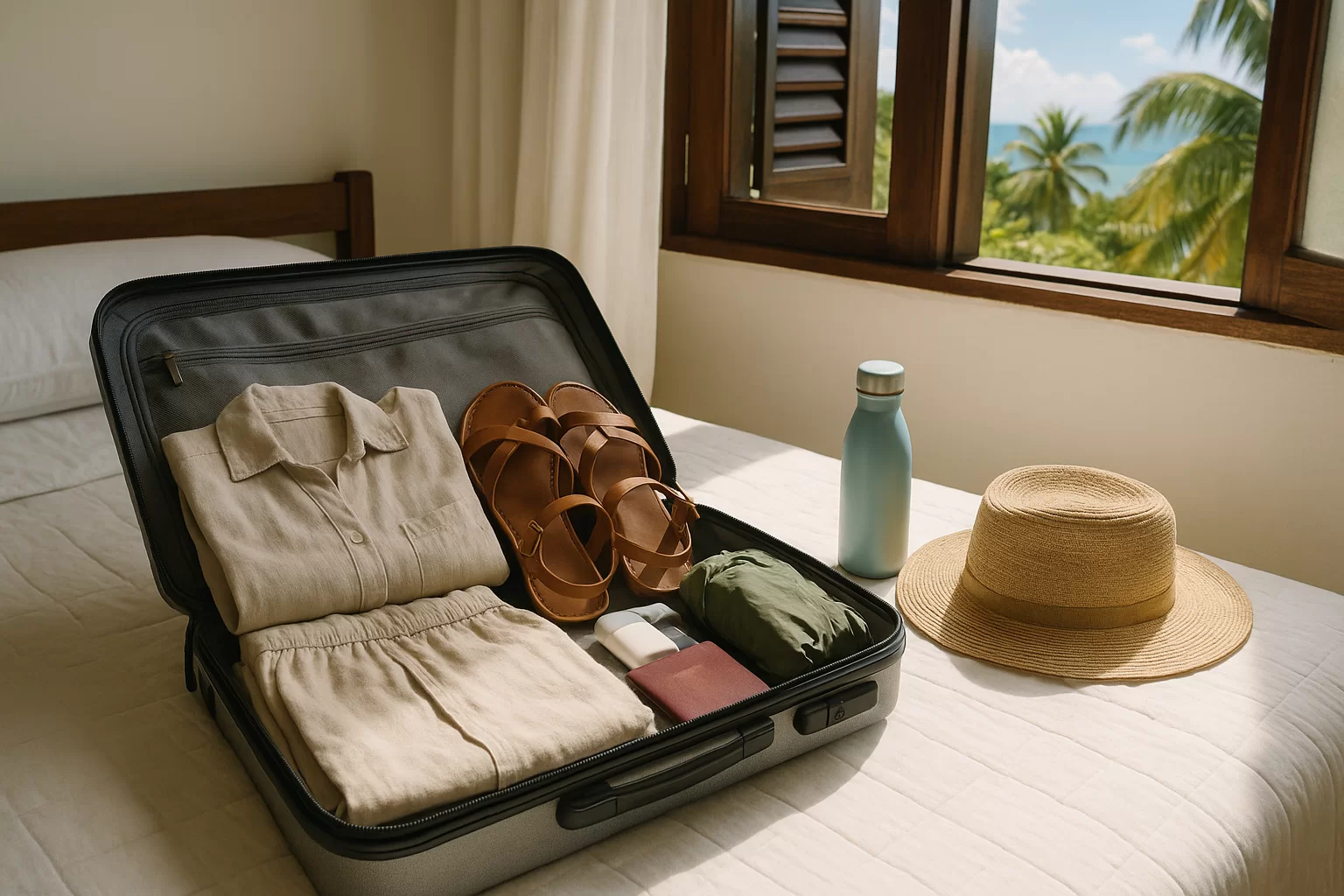
Good island travel packing tips are not just about fitting swimsuits into a carry-on. First-time visitors need to think about heat, saltwater, transport limits, sudden rain, medical access, local customs, and what happens when a ferry is delayed.
This guide helps you pack for a relaxed, practical first island trip without hauling a heavy suitcase through sand, docks, stairs, and small guesthouses. Use it as a decision tool, then check current local guidance before you leave.
Quick Answer
For a first island trip, pack a small carry-on or soft-sided bag, three to five breathable outfits, swimwear, sun-protective clothing, sandals with grip, a light rain layer, basic medication, insect repellent, reef-conscious sunscreen, reusable water bottle, offline documents, and a compact day bag. Avoid packing bulky beach towels, too many shoes, heavy denim, or expensive jewelry. Before departure, check airline or ferry luggage limits, local weather, health advice, payment access, and whether your accommodation provides towels, snorkel gear, laundry, or beach items.
Trip Decision Builder
Choose your trip style, weather, bag size, and priority to get a useful packing and planning direction.
Choose the options above, then build a recommendation you can use with the checklist, table, and sources in this guide.
In This Guide
Smart Packing Principles for a First Island Trip
Island packing starts with movement. You may roll your bag over uneven docks, lift it into a water taxi, store it in a small plane hold, or carry it up guesthouse steps. A soft-sided carry-on, backpack, or lightweight checked bag usually performs better than a rigid oversized suitcase. If your route includes multiple islands, pack as if you will personally carry everything for ten minutes in heat.
Think in systems rather than single items: sun system, rain system, swim system, health system, and document system. This keeps your bag balanced and prevents the common first-timer problem of having six cute outfits but no dry bag, no blister care, and no backup payment method.
Best Bag Choice
A carry-on backpack or small soft suitcase works well for most islands. Choose something you can lift easily, wipe clean, and move through sand, ferry ramps, narrow streets, or stairs without help.
Best Clothing Rule
Pack clothes that dry quickly and mix together. Three tops, two bottoms, one nicer outfit, swimwear, and a light layer often beat a full suitcase of single-use looks.
Best Day Bag
Bring a small backpack, sling, or dry bag for boat days and beach walks. It should fit water, sunscreen, phone, documents, medication, and a light layer without becoming bulky.
Best Mindset
Plan for comfort before aesthetics. Island travel rewards people who can handle sun, sweat, salt, wind, bugs, and delays with simple gear that is easy to wash and rewear.
For timing, pack two or three days before departure, not the night before. This gives you time to test shoe comfort, charge power banks, download offline maps, confirm accommodation amenities, and remove items you added out of anxiety. If you are flying to a cruise port, ferry terminal, or remote island, keep medications, documents, one swim outfit, and basic toiletries in your personal item in case a checked bag arrives late.
Island Travel Packing Tips by Category
The most useful island travel packing tips are category based because islands are shaped by microclimates, water activities, and limited infrastructure. A breezy Atlantic island, a humid Caribbean island, a Greek ferry route, and a remote Pacific atoll will not require identical bags, but the categories below apply almost everywhere.
| Category | Pack | Skip | Current Check | Why It Matters |
|---|---|---|---|---|
| Clothing | Linen, quick-dry, layers | Heavy denim | Evening temperatures | Comfort after sunset |
| Footwear | Grip sandals, walking shoes | New shoes | Road and trail conditions | Fewer blisters |
| Health | Meds, first aid, repellent | Loose pill bags | CDC travel advice | Limited pharmacies |
| Water Days | Dry bag, rash guard | Bulky towels | Boat luggage rules | Drier essentials |
| Money | Cash, two cards | One payment source | ATM access | Backup for outages |
| Documents | Copies, offline files | Unprotected papers | Entry and ferry rules | Smoother transfers |
Clothing should be light but not flimsy. Bring breathable shirts, shorts or skirts, one long-sleeve sun layer, one modest outfit for villages or religious sites, sleepwear, underwear, and a packable rain shell. If you plan restaurants, a single wrinkle-friendly outfit is enough for most casual islands. Laundry soap sheets or a small laundry kit can cut your clothing volume in half.
For swim and beach days, bring two swimsuits so one can dry while you wear the other. Add a rash guard or UPF shirt, sunglasses, a secure hat, and a reusable water bottle. A compact microfiber towel is useful only if your stay does not provide beach towels. Many first-timers pack snorkels, fins, floaties, speaker gear, and multiple towels, then discover rentals or hotel amenities would have saved space.
Footwear is a safety item. Pack one pair of comfortable walking shoes or trail sandals and one pair of water-friendly sandals with traction. Smooth flip-flops are fine for showers or short beach walks, but they can be slippery on wet docks, coral paths, boat decks, and steep lanes. Do not bring brand-new shoes unless you have tested them on a long walk.
Your health pouch should be organized, labeled, and easy to reach. Include prescription medications in original packaging when practical, motion sickness support if boats are likely, pain relief, antihistamine, blister patches, basic wound care, oral rehydration packets, hand sanitizer, and insect repellent. The CDC travel packing guidance is especially useful for international island trips because local clinics and pharmacies may not stock your preferred brands.
Electronics should be simple and protected from salt, sand, and humidity. Bring a universal adapter if needed, charging cables, a power bank, waterproof phone pouch or dry bag, and offline copies of travel documents. If you rely on your phone for boarding passes, maps, banking, or translation, protect it like a travel essential rather than a casual accessory.
Mini packing test: Place everything on the bed, then remove anything that serves only one unlikely situation. Keep items that solve repeated problems: heat, sun, rain, walking, water, documents, money, and sleep.
Weather, Transport, Safety, and Budget Checks Before You Zip the Bag
Packing well means checking the realities of your specific island week. Weather apps can show rain every day in tropical places even when showers last twenty minutes, while windy islands can feel cool after sunset despite strong sun at noon. Look at temperature, wind, UV levels, sea conditions, and rain timing, not just the weather icon.
Transport deserves equal attention. Ferry companies, seaplanes, small inter-island flights, and shared boats may have smaller luggage allowances than your international flight. Check current weight, size, and arrival-time rules directly with the operator before packing. If you must walk from a dock to lodging, ask about hills, cobblestones, sand lanes, or shuttle options.
Sun and UV
Strong island sun can burn through cloudy days. Pack sunscreen, lip balm with SPF, sunglasses, a brimmed hat, and a long-sleeve swim layer. NOAA UV safety guidance supports taking shade and protective clothing seriously.
Rain and Wind
A light rain shell beats an umbrella on windy docks and boat transfers. Use packing cubes or dry bags so one wet item does not spread moisture through your whole suitcase.
Money Access
Small islands may have limited ATMs, card minimums, or occasional outages. Carry modest local cash, two payment cards stored separately, and emergency contact numbers for your bank.
Transport Delays
Weather can delay boats and small planes. Keep snacks, water, medication, charger, and one extra layer accessible, not buried in checked luggage or strapped under a pile of beach gear.
Budget planning changes what you pack. If the island is expensive or remote, small essentials such as sunscreen, insect repellent, diapers, feminine products, or medication may cost more or be harder to find. If the island has reliable rentals and affordable laundry, you can pack lighter. Email your accommodation before departure and ask what is provided: beach towels, hair dryer, kettle, laundry access, snorkel gear, umbrellas, and safe storage.
Safety packing is not fear-based; it is friction reduction. Bring a small flashlight or headlamp for dark lanes, a whistle if you hike or kayak, a card with emergency contacts, and copies of your passport or ID. For solo travelers, share your arrival details with someone trusted and keep transport information offline. For families, pack child medication, sun hats, snacks, and a change of clothes where they are instantly reachable.
First-Time Island Packing Mistakes to Avoid
The biggest mistake is packing for a fantasy version of the trip instead of the itinerary you actually booked. A resort stay, a sailing week, a hiking island, a quiet guesthouse, and an island-hopping route require different footwear, clothing, and luggage size. Review each day of your plan and pack for those activities, not for every possible activity.
A second mistake is ignoring local norms. Some islands are relaxed at the beach but conservative in towns, markets, churches, temples, or family-run restaurants. A light cover-up, loose shirt, or longer skirt can help you move respectfully between beach and community spaces. Respectful packing also includes avoiding loud speakers in quiet coves, limiting single-use plastics, and choosing reef-aware sun protection where requested.
Decision guidance: If an item is expensive to replace, essential for health, or needed during the first 24 hours, carry it with you. If it is bulky, cheap to rent, or useful only once, consider leaving it out.
Do not overpack toiletries. Liquids are heavy, leak easily, and may trigger airline limits. Use small containers, seal them in a bag, and bring only enough for the first days unless you need a specific product. Sunscreen is the exception for many travelers: if you have sensitive skin or require a particular formula, bring enough and check local rules or recommendations before you go.
Another common problem is poor document management. Screenshot bookings, ferry tickets, accommodation addresses, travel insurance information, and emergency contacts. Save them offline and keep a paper backup for key details. Island Wi-Fi can be excellent in one village and unreliable in the next, and roaming plans may not work exactly as expected.
Finally, avoid packing valuables you would be worried to leave in a room or dry bag. Saltwater, sand, and crowded beaches are hard on jewelry, watches, designer bags, and delicate electronics. Bring practical items you can enjoy without constantly guarding them. The lighter your emotional luggage, the easier the trip feels.
A Simple First-Day Island Packing Plan
Your first day is when good packing pays off. Wear comfortable travel clothes and shoes suitable for heat, stairs, and walking. In your personal item, keep passport or ID, wallet, phone, charger, medications, sunglasses, swimsuit, light layer, toothbrush, deodorant, and any ferry or transfer details. If your room is not ready, you can still eat, swim, or explore without opening your main bag.
When you arrive, do a quick reset before heading out. Confirm return transport times, note the nearest pharmacy or clinic, ask where to refill water, and separate beach items from town items. Put wet gear in one place, documents in another, and shoes where sand will not spread through the room. This five-minute habit prevents clutter and lost items all week.
For island hopping, repack every evening before a transfer day. Place the next ticket, cash, water, snack, rain shell, and medication at the top of your bag. Assume you may wait in sun, board in light rain, or carry your luggage briefly. This is where a lighter packing style becomes more than convenient; it protects your energy.
Current-check reminder: Before leaving home, verify entry requirements, health guidance, transport schedules, luggage limits, weather alerts, accommodation amenities, and payment access from official or direct sources. Do not rely only on old forum posts or screenshots.
Summary and Final Thoughts
The best island bag is light, flexible, and built around real conditions: sun, saltwater, rain, walking, transport limits, and occasional delays. Pack fewer outfits, better shoes, stronger sun protection, basic health supplies, offline documents, and a day bag that can handle beach and boat days.
Use these island travel packing tips as a framework, then adapt them to your destination, season, budget, and travel style. First-time island visitors do not need to be perfectly prepared for everything; they need the right essentials, a little backup, and enough space to enjoy the journey.
FAQ
What should I pack first for an island trip?
Start with essentials you cannot easily replace: passport or ID, medications, payment cards, phone, charger, travel insurance details, and key bookings. Then add sun protection, breathable clothing, safe footwear, swimwear, and a basic health kit before deciding on extras.
Is a carry-on enough for a first island vacation?
A carry-on is enough for many one-week island trips if laundry is available and your plans are casual. It works especially well for ferry routes and guesthouses. Choose checked luggage only when carrying family gear, specialty equipment, or longer-stay supplies.
Do I need water shoes for island travel?
Water shoes are useful for rocky beaches, coral fragments, slippery boat landings, waterfalls, and reef-safe walking areas where permitted. They are less necessary for soft-sand resort beaches. Check the beach type and planned activities before adding them to your bag.
How do I pack for both beach and rainy weather?
Use quick-dry clothing, a compact rain shell, dry bags or zip pouches, and sandals with traction. Avoid cotton-heavy outfits that stay wet. Keep one dry outfit separate for evenings, ferries, or restaurants after a rainy beach day.
What should first-time visitors not pack for islands?
Skip heavy denim, too many shoes, bulky towels, expensive jewelry, large hard suitcases, and single-use outfits. Avoid packing gear you can easily rent, such as fins or beach chairs, unless you know rentals are unavailable or unsuitable.
Sources and Further Reading
- What transportation or attraction recommendations can you give for cities that are unknown to first-time travelers?
- Quiet Island Travel Ideas for Rest and Reflection
- Solo Female Travel Packing List: The Ultimate Guide
- Safest Islands To Travel Alone: Your Solo Adventure Guide
- CDC Travelers' Health - Pack Smart for International Travel
- National Ocean Service - UV Safety