Key Takeaways
- Good hotel room meals start with knowing what equipment you actually have: fridge, microwave, kettle, coffee maker or none.
- No-cook meals are often the easiest option because they reduce cleanup, heat, smell and food safety risk.
- Buy smaller portions, choose shelf-stable staples and treat the hotel mini-fridge as short-term storage only.
- Food safety matters when travelling, especially with leftovers, dairy, seafood, deli meats and unfamiliar water sources.
- A simple meal plan saves money without making your trip feel like a strict diet or a camping project.
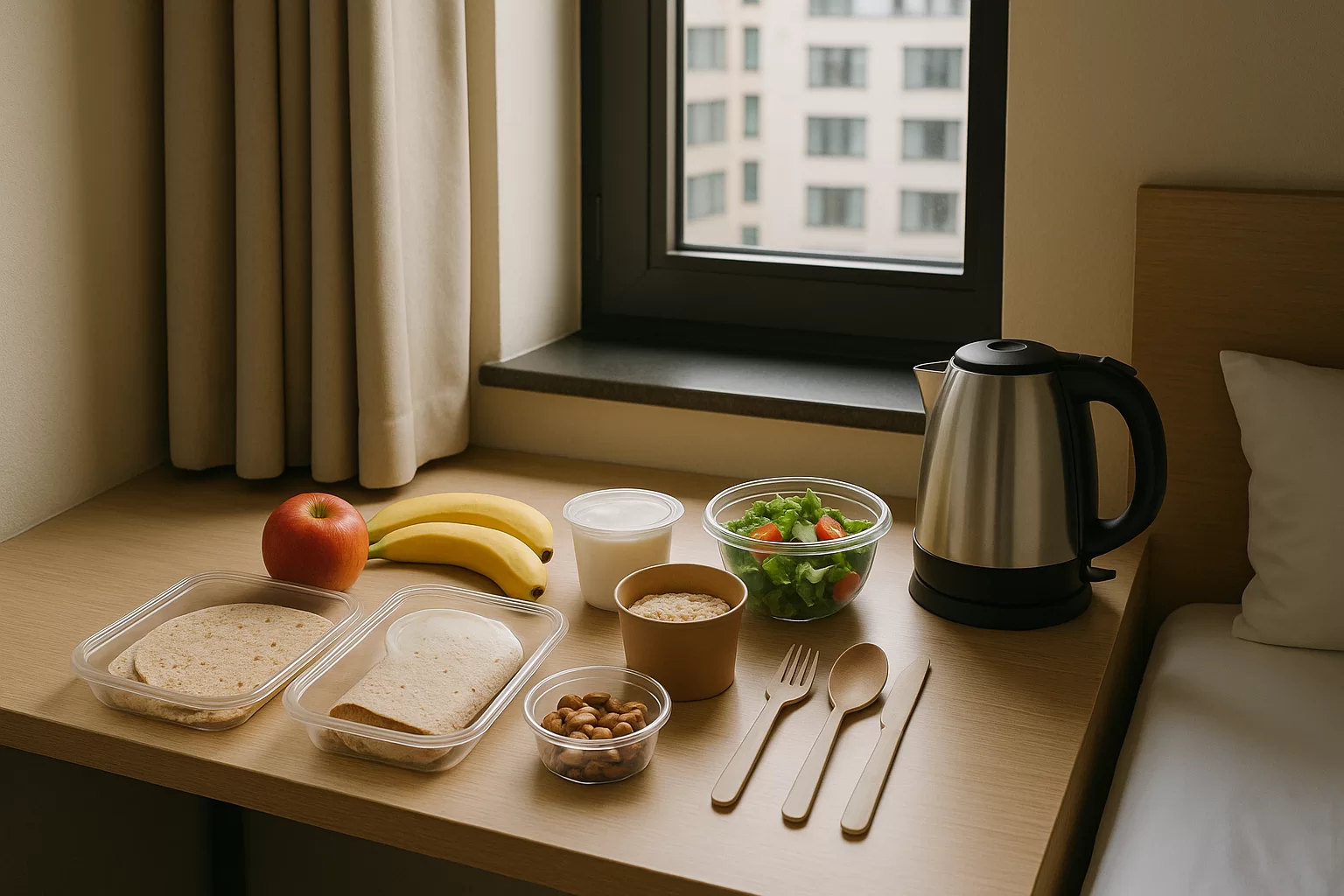
Hotel food can be convenient, but it can also be expensive, repetitive or hard to fit around sightseeing days. These simple hotel room meal ideas are for travellers who want quick, satisfying food without a full kitchen, special gear or a long grocery run.
The goal is not to cook elaborate meals in a room that was not designed for cooking. It is to combine smart staples, safe storage and low-mess techniques so breakfast, lunch, dinner and snacks feel easier on busy travel days.
Quick Answer
The best hotel room meal ideas are built around no-cook staples, microwave-friendly bases and fresh add-ons you can buy in small portions. Think oats, yogurt bowls, wraps, bagged salads, microwave rice, canned tuna or beans, soup cups, fruit, nuts and ready-to-eat vegetables. Before shopping, check whether your room has a fridge, microwave, kettle or only a coffee maker. Keep meals low-odor, simple to clean and safe to store, and avoid risky leftovers if you cannot refrigerate them properly.
Food Decision Builder
Choose your goal, time, meal style, and comfort level to get a practical food direction.
Choose the options above, then build a recommendation you can use with the checklist, table, and sources in this guide.
In This Guide
Match Hotel Room Meal Ideas to Your Setup
Before you buy food, do a two-minute room check. Look for a mini-fridge, microwave, kettle, coffee maker, ice bucket, mugs, desk space and accessible outlets. Also check the hotel rules, because some properties do not allow personal appliances or strong-smelling food preparation in rooms.
If you are unsure, ask the front desk whether a microwave is available in the lobby, breakfast area or guest laundry. Many travellers overspend because they shop as if they have a kitchen, then discover there is nowhere safe to chill ingredients or heat food.
No fridge
Choose shelf-stable foods such as nut butter packets, crackers, instant oats, fruit, tuna pouches, nuts and sealed meal cups. Buy dairy, salads and cold drinks only when you plan to eat them soon.
Mini-fridge only
Build meals around yogurt, hummus, cheese, boiled eggs, deli alternatives, salad kits and fresh fruit. Keep quantities small because hotel fridges can be uneven and often lack reliable temperature controls.
Microwave access
Add microwave rice, steam-in-bag vegetables, soup, oatmeal, baked potatoes and ready grains. Use vented containers, short heating bursts and a plate underneath to prevent spills and lingering smells.
Kettle or coffee maker
Use hot water for instant oats, couscous, noodle cups, tea, miso soup or freeze-dried meals. Never cook messy food inside the appliance, and rinse shared equipment respectfully before and after use.
Traveller tip: Pack one reusable spoon, a folding fork, a small food-safe container, napkins and a few zip bags if your airline and destination rules allow them. These tiny items make simple meals much easier without turning your luggage into a kitchen kit.
Simple Meals for Breakfast, Lunch and Dinner
The easiest hotel meals use one base, one protein, one fresh item and one flavor boost. That formula keeps meals balanced enough for travel days while staying flexible for different budgets, diets and local grocery options.
Use these ideas as mix-and-match templates. If you have allergies, dietary restrictions or medical nutrition needs, check labels carefully and follow professional guidance rather than relying on hotel or convenience-store assumptions.
Breakfasts that need little or no cooking
- Overnight-style oats: Mix instant oats with milk, shelf-stable milk or yogurt in a cup, then add banana, nuts or dried fruit.
- Yogurt bowl: Combine Greek yogurt, granola, berries and seeds for a filling breakfast that takes two minutes.
- Peanut butter banana wrap: Spread nut butter on a tortilla, add banana slices, roll and eat on the way out.
- Microwave egg mug: If allowed and available, cook beaten eggs in short bursts, stirring often, then add cheese or spinach.
- Bakery plus protein: Pair a local pastry with yogurt, milk, boiled eggs or nuts so breakfast lasts longer.
Lunches for sightseeing days
- Hummus wrap: Add hummus, cucumber, greens and feta or chickpeas to a tortilla for a cool, low-mess lunch.
- Tuna or salmon rice bowl: Use a pouch of fish, microwave rice, soy sauce packets and sliced vegetables.
- Salad kit upgrade: Add canned beans, rotisserie chicken, tofu, cheese or nuts to make a supermarket salad more satisfying.
- Snack plate: Combine crackers, cheese, fruit, carrots, olives and nuts for a flexible lunch when appetite is unpredictable.
- Instant couscous bowl: Add hot water to couscous, then mix with chickpeas, tomatoes, lemon and olive oil packets.
Dinners that feel like real meals
- Microwave baked potato: Top with beans, salsa, cheese, yogurt or steamed vegetables for a hearty dinner.
- Soup and sandwich: Heat soup if possible, then add a simple sandwich, wrap or bread roll.
- Noodle cup upgrade: Add frozen vegetables, tofu, boiled egg or leftover cooked chicken if you can store it safely.
- Bean and rice bowl: Combine microwave rice, canned beans, salsa, avocado and greens for a budget-friendly meal.
- Ready grain bowl: Start with pre-cooked quinoa or rice, then add salad leaves, protein and a dressing packet.
| Meal | No-cook option | Microwave option | Best add-on | Watch out for |
|---|---|---|---|---|
| Breakfast | Yogurt bowl | Oatmeal cup | Fruit | Warm dairy |
| Lunch | Hummus wrap | Rice bowl | Greens | Soggy bread |
| Dinner | Snack plate | Potato bowl | Beans | Strong smells |
| Late snack | Fruit and nuts | Soup cup | Crackers | Too much salt |
| Travel day | Nut butter wrap | Instant oats | Banana | Liquids at security |
| Family meal | DIY wraps | Pasta cup | Vegetables | Messy sauces |
Hotel Room Meal Builder and Shopping Guide
Use this simple tool at the grocery store: choose two bases, two proteins, two fresh items, two flavor boosters and one treat. That gives you enough variety for several meals without filling the room with half-used packages.
For a two-night stay, buy fewer refrigerated items than you think you need. For a longer stay, plan a small restock every few days instead of gambling on a crowded mini-fridge and stale ingredients.
The 2-2-2-2-1 hotel meal builder
- 2 bases: tortillas, microwave rice, oats, bread rolls, couscous or crackers.
- 2 proteins: Greek yogurt, beans, tuna pouches, tofu, cheese, eggs, nuts or hummus.
- 2 fresh items: bananas, apples, baby carrots, cucumbers, salad greens or tomatoes.
- 2 flavor boosters: salsa, hot sauce, lemon, dressing, soy sauce, pesto or spice packets.
- 1 treat: dark chocolate, local bakery item, popcorn, sparkling water or a favorite snack.
Budget traveller basket
Buy oats, bananas, peanut butter, tortillas, canned beans, microwave rice and salsa. This basket makes breakfasts, wraps and bowls cheaply, with most items shelf-stable if plans change.
Healthy-ish work trip basket
Choose Greek yogurt, fruit, salad kits, hummus, carrots, nuts and wholegrain wraps. It supports quick meals between meetings without relying on vending machines or heavy restaurant lunches.
Family hotel basket
Pick tortillas, cheese, fruit, yogurt cups, crackers, nut-free spread if needed, soup cups and snack vegetables. Keep sauces mild and separate so children can build meals themselves.
Late-arrival basket
Choose shelf-stable oatmeal, tuna pouches, crackers, fruit cups, nuts and instant soup. It is useful when stores are closed, room service has ended or you arrive too tired to search for dinner.
Mistakes that make hotel meals harder
- Buying family-size packages: Savings disappear if you throw food away before checkout.
- Ignoring utensils: A great salad is annoying when you have no fork, napkin or bowl.
- Choosing messy sauces: Red sauces, oily dressings and leaky containers can stain bedding or luggage.
- Planning only cold food: After a rainy or tiring day, one hot option can feel far more satisfying.
- Forgetting local rules: Some destinations restrict fresh produce, meat or dairy crossing borders or checkpoints.
When possible, shop near the hotel after checking in rather than on the way from the airport. You will know your actual storage space, whether ice is available and whether the room has a microwave hidden in a cabinet or a kettle on the desk.
Food Safety, Allergies and Hotel Etiquette
Travel changes your usual food routine, and that can raise the risk of stomach trouble. The CDC's travel food and water safety advice is especially relevant when you are unsure about tap water, raw foods, street food handling or refrigeration. The NHS also highlights that food poisoning can come from food that is not cooked, chilled, handled or reheated properly.
Use common sense and current local guidance. If you are pregnant, immunocompromised, elderly, travelling with young children or managing a medical condition, be more cautious with raw foods, unpasteurized products, seafood, deli meats and leftovers.
Practical safety rules in a hotel room
- Keep cold food cold: Do not leave yogurt, cooked meat, seafood, cut fruit or salads sitting out while you nap or tour.
- Check the fridge: A mini-fridge that feels barely cool is not ideal for high-risk leftovers.
- Use clean surfaces: Prepare food on a plate, wrapper or clean container, not directly on the desk.
- Wash hands: Soap and water are best; hand sanitizer helps when you are eating on the move.
- Reheat carefully: Food should be steaming hot throughout, not warm at the edges and cold inside.
- Trust your senses, but not only them: Food can be unsafe even if it smells fine, so respect storage times.
Allergies and dietary needs
Hotel room meals can help travellers with allergies because you control more ingredients, but labels still matter. Check for shared equipment warnings, language differences on packaging and sauces that hide allergens such as sesame, fish, milk, peanuts, wheat or soy.
If you have a severe allergy, bring safe backup food, carry prescribed medication as directed and ask food businesses direct questions rather than assuming a simple meal is safe. For complex medical diets, follow advice from your clinician or registered dietitian.
Etiquette that keeps things pleasant
A hotel room is a shared building, not a private apartment. Avoid cooking foods with strong lingering smells, spilling sauces on linens, blocking sinks with scraps or leaving open food that may attract pests. Put waste in sealed bags and remove it promptly if the room becomes warm.
Be careful with appliances. Do not put noodles, eggs or sauces inside a kettle or coffee maker. Those appliances are hard to clean, and the next guest may want plain hot water or coffee without a surprise aroma.
Summary and Final Thoughts
Simple hotel room meal ideas work best when they match your room, your schedule and your tolerance for cleanup. A few reliable bases, proteins, fresh items and flavor boosters can cover breakfast, lunch, dinner and snacks without making food the main project of your trip.
Keep safety and comfort in the plan: buy small portions, chill risky foods properly, respect hotel rules and avoid meals that create smells or mess. With a little structure, eating in your room can save money and still feel relaxed, local and satisfying.
FAQ
What meals can I make in a hotel room with no microwave?
Choose no-cook meals such as yogurt bowls, hummus wraps, tuna cracker plates, salad kits with beans, peanut butter banana wraps and fruit with nuts. If you have a kettle, instant oats, couscous and soup cups may also work, as long as you use clean containers.
Is it safe to keep leftovers in a hotel mini-fridge?
Sometimes, but be cautious. Mini-fridges can vary in temperature, especially when packed tightly or opened often. Store leftovers quickly in sealed containers, eat them soon and avoid keeping high-risk foods such as seafood, cooked meat or dairy if the fridge feels only slightly cool.
What should I buy first for easy hotel meals?
Start with versatile basics: tortillas or oats, a protein such as yogurt, beans or tuna, fresh fruit, snack vegetables and one sauce or seasoning. Add microwave rice, soup or potatoes only if you know you have reliable microwave access.
How can I eat cheaply in a hotel without eating junk food?
Use grocery-store combinations instead of single convenience snacks. Oats, bananas, yogurt, beans, rice, salad kits, wraps and nuts are usually cheaper than restaurant meals and more filling than candy or chips. Buy small amounts so you do not waste food at checkout.
What foods should I avoid preparing in a hotel room?
Avoid foods that smell strongly, splatter, require precise refrigeration or need thorough cooking that your setup cannot provide. Raw meat, seafood, greasy fried foods and messy sauces are usually poor choices. They can create safety issues, cleanup problems and complaints from nearby guests.