Key Takeaways
- A good hiking and camping headlamp should be comfortable first: the best brightness in the world is useless if the strap digs in, slips, or feels heavy after an hour.
- Look for useful brightness, not just huge lumen numbers: most campers need a reliable low mode, a practical walking mode, and a brighter setting for short route checks.
- Battery life matters more than maximum power: a headlamp that lasts through cooking, tent setup, night walking, and an emergency is more useful than one that burns bright for a short time.
- Water resistance is important: rain, condensation, wet packs, and muddy campsites make a basic weather rating worth having.
- Simple controls are safer in the dark: choose a lamp you can operate with gloves or cold fingers without cycling through confusing modes.

Choosing a headlamp sounds simple until you start comparing lumens, beam distance, battery life, red light mode, waterproof ratings, rechargeable batteries, tilt angles, lock modes, and straps. For hiking and camping, the best headlamp is not always the brightest one. It is the one that feels comfortable, lasts long enough, works in wet weather, and gives you the right light for the job.
A good headlamp should help you pitch a tent after sunset, cook safely, walk to the toilet block, read a map, check a trail marker, find something inside your backpack, or handle a small emergency without needing to hold a torch in your hand. That hands-free design is exactly why headlamps are listed among outdoor illumination essentials by safety-focused hiking resources.
Quick Answer: What Is a Good Headlamp for Hiking and Camping?
A good headlamp for hiking and camping is lightweight, comfortable, weather-resistant, easy to use, and bright enough for both camp tasks and night walking. For most people, look for adjustable brightness, a useful low mode, around 200–400 lumens for general trail use, decent run time, a red light option, a secure strap, and at least basic water resistance. For remote or wet trips, carry spare power or a small backup light.
In This Guide
What Makes a Good Headlamp?
A good headlamp is the one you will actually wear and trust. It should sit securely on your head without bouncing, aim light where you need it, and stay comfortable while you walk, cook, pack, or read. It should also be simple enough that you can change brightness without stopping to study the buttons.
For hiking and camping, think in terms of real situations rather than marketing numbers. You need enough light for uneven ground, enough battery for the night, and enough weather protection for rain or damp conditions. If you camp often, a rechargeable model can save money over time. If you hike far from charging options, spare batteries or a backup power bank may matter more.
For Campsites
Prioritise low brightness, red light mode, comfort, and long battery life. You do not want to blind friends around the tent or drain the battery too quickly.
For Night Hiking
Prioritise secure fit, a mixed beam, enough brightness for uneven ground, and controls that are easy to use while moving.
For Backpacking
Prioritise light weight, reliable run time, compact size, and a backup charging plan. Every gram matters when you carry everything on your back.
For Wet Weather
Prioritise water resistance, sealed charging ports, durable buttons, and a strap that still grips when damp.
Brightness and Lumens: How Much Do You Really Need?
Lumens measure light output, but a bigger number does not automatically mean a better headlamp. A very bright lamp can drain faster, reflect badly in fog or rain, and annoy other campers. What matters is having brightness levels you can actually use.
For most camping tasks, a low setting is enough. Reading in a tent, sorting gear, or walking around camp does not need extreme brightness. For trail walking, rough ground, or checking a path ahead, a stronger mode is useful. For emergency signalling or searching, the brightest setting can help, but it should not be your only useful mode.
| Use | Useful Brightness | Why It Helps |
|---|---|---|
| Inside the tent | Very low mode | Comfortable for reading, changing clothes, or finding small items without glare. |
| Cooking or camp jobs | Low to medium | Enough to see hands, stove area, food, and tent lines without blinding others. |
| Walking around camp | Medium | Helps avoid roots, rocks, mud, guy lines, and uneven ground. |
| Night hiking | Medium to high | Useful for seeing trail shape, steps, junctions, and hazards ahead. |
| Emergency or search | High mode | Best used briefly for signalling, scanning, or checking distance. |
Battery Life and Power Type
Battery life is one of the biggest differences between a good headlamp and a frustrating one. Do not judge the lamp only by the longest run-time claim, because that number may be measured on a very low setting. Instead, ask how long the lamp lasts on the brightness you will actually use.
Rechargeable headlamps are convenient for weekend camping, car camping, festivals, and regular use. You can charge them from a wall plug, power bank, solar setup, or car charger, depending on the model and trip. Replaceable battery headlamps are still useful for longer routes because you can carry spare batteries and swap them quickly.
Rechargeable
Good for regular campers who want convenience and less battery waste. Bring a power bank if you are away from mains electricity.
Replaceable Batteries
Good for longer trips, cold conditions, and remote places where charging is unreliable. Pack spare batteries safely.
Hybrid Models
Some headlamps accept either a rechargeable pack or standard batteries, giving more flexibility for different trips.
Backup Light
For remote hikes, carry a small backup torch or second headlamp. One light failure at night can become a real problem.
Beam Pattern: Spot, Flood, and Mixed
The beam pattern decides how the light spreads. A flood beam lights up the area near you, which is perfect for cooking, tent setup, and walking slowly around camp. A spot beam sends light further ahead, which helps when looking down a trail or checking a route marker. A mixed beam gives you a bit of both.
For most hikers and campers, a headlamp with both flood and spot options is the easiest choice. You can use flood mode for close work, then switch to a stronger focused beam when you need distance. Adjustable tilt is useful too because you can aim the light at your hands, feet, or trail without bending your neck awkwardly.
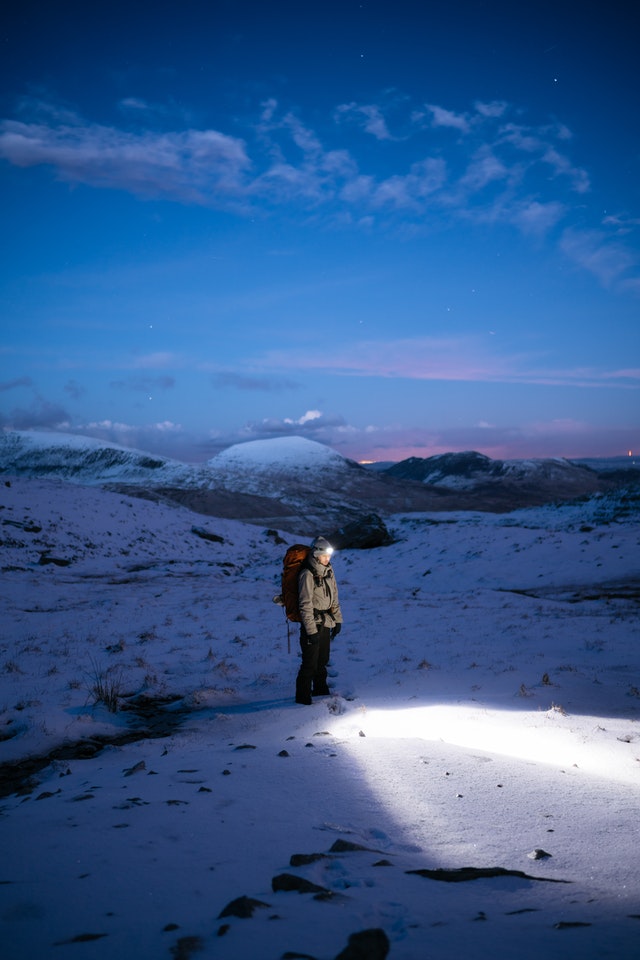
Comfort, Weight, and Strap Fit
Comfort matters because a headlamp sits directly on your forehead. If it feels heavy, bouncy, or tight, you will keep taking it off. The lamp should feel stable without needing the strap painfully tight. This matters even more during long hikes, cold nights, and trips where you may wear a hat underneath.
Lightweight headlamps are usually better for backpacking and casual camping. Heavier lamps may offer bigger batteries or stronger beams, but they can feel front-heavy. If you need a powerful model, look for a design with a balanced battery pack or a top strap for support.
- Check whether the strap is easy to adjust with cold fingers.
- Make sure the lamp does not bounce when you walk quickly.
- Try it over a beanie or cap if you camp in cooler weather.
- Look for a lock mode so it does not turn on inside your backpack.
Water Resistance and Durability
Outdoor lighting has to deal with rain, damp tents, muddy hands, condensation, and accidental drops. For normal hiking and camping, at least basic splash resistance is important. IP ratings help describe how protected a product enclosure is against dust and liquids, so they are worth checking before buying.
As a simple rule, IPX4 is usually enough for rain and splashes, while stronger ratings are better for kayaking, heavy rain, river crossings, or very wet trips. Water resistant does not always mean waterproof, and waterproof does not always mean suitable for deep or long submersion, so always check the manufacturer’s details.
Useful Extra Features
Extra features are helpful only when they make the headlamp easier or safer to use. A red light mode is one of the most useful camping features because it is gentler around other people and less harsh inside a tent. A lock mode is also important because it stops the lamp switching on inside your bag and draining before you arrive.
Red Light Mode
Useful around camp, inside tents, and when you want less glare at night.
Tilt Adjustment
Lets you aim light at your hands, trail, food, or map without moving your whole head.
Lock Mode
Stops accidental battery drain inside your backpack or pocket.
Memory Mode
Some lamps remember your last setting, which saves time if you use the same brightness often.
Headlamp Buyer Checklist
Before buying, use this simple checklist. It helps you avoid choosing a headlamp just because the box says it is bright.
Quick Buying Checklist
- Comfort: does it sit securely without pressure on your forehead?
- Brightness: does it have low, medium, and high modes you will actually use?
- Beam: does it offer flood light for camp and enough distance for walking?
- Battery: can it last through a full evening and a possible emergency?
- Charging: can you recharge it or replace batteries during your trip?
- Weather rating: is it suitable for rain, sweat, and damp gear?
- Controls: can you operate it in the dark without confusion?
- Backup plan: do you have spare power or a second small light?
Common Headlamp Buying Mistakes
The first mistake is buying the brightest lamp without thinking about battery life. A huge lumen number looks impressive, but if the lamp drains quickly or feels uncomfortable, it may not be practical for camping.
The second mistake is ignoring low mode. Camp life often needs soft light, not a blinding beam. The third mistake is forgetting water resistance. Even if you do not plan to hike in rain, the outdoors can still be damp, muddy, and unpredictable.
Finally, do not rely on one light for a serious route. If you are hiking at night, camping remotely, or travelling in winter, carry spare power and a backup light. The National Park Service lists illumination as one of the Ten Essentials, and headlamps are preferred because they keep your hands free.
Summary and Final Recommendation
A good headlamp for hiking and camping should be comfortable, reliable, weather-resistant, and simple to use. Choose a model with practical brightness levels, a beam pattern that works for both camp and trail, strong battery life, and controls you can understand quickly in the dark.
For most people, the sweet spot is not the most powerful headlamp. It is a comfortable rechargeable or hybrid model with low, medium, high, red light, tilt adjustment, lock mode, and enough water resistance for rain. Add spare power or a small backup torch, and you will be much better prepared for nights outdoors.
FAQ
How many lumens do I need for a hiking headlamp?
For most hiking and camping, a headlamp with adjustable output around 200 to 400 lumens is enough. Use lower settings around camp and brighter modes only for route finding, rough ground, emergencies or short distance checks.
Is a rechargeable or battery headlamp better for camping?
A rechargeable headlamp is convenient for regular use, while replaceable batteries can be useful on longer trips where charging is difficult. Many campers prefer rechargeable models but still carry a backup light or spare power bank.
Do I need a waterproof headlamp?
You should choose at least a water-resistant headlamp for hiking and camping. An IPX4 rating is usually suitable for rain and splashes, while stronger ratings are better for wet, rough or water-heavy trips.
Why do hikers use red light mode on a headlamp?
Red light mode is useful around camp because it is less harsh than white light, helps preserve night vision and is less likely to disturb other campers when used carefully.
What is the best headlamp feature for beginners?
Beginners should prioritise comfort, simple controls, reliable battery life, a useful low mode and a secure adjustable strap. A complicated headlamp is not helpful if it is difficult to use in the dark.
Sources and Further Reading
- REI Expert Advice: How to Choose Headlamps
- National Park Service: Ten Essentials
- IEC: Ingress Protection Ratings
- Leave No Trace: The 7 Principles
- The Ultimate Overnight Backpacking Checklist for Hiking
- What Makes the Best Camping Backpack
- How Can I Find Quality Sleeping Bags?
- The Best Winter Hammock Camping Gear List
- Compasses That People Use for Hiking
Affiliate Disclosure: This article may contain affiliate links, including Amazon Associate links, outdoor gear links, and travel resources. ChipJourney participates in the Amazon Services LLC Associates Program. If you buy through one of these links, ChipJourney may earn a small commission at no extra cost to you.