Key Takeaways
- The empty seat on the last night bus is a slow-burn urban horror story built around ordinary travel details.
- The scare works because the danger is suggested through small changes instead of loud shocks.
- Readers can use the included clue tracker to notice how tension rises scene by scene.
- The article also includes practical late-night transit reminders without turning the story into a safety lecture.
- The ending is intentionally unsettling, leaving room for both supernatural and psychological interpretations.
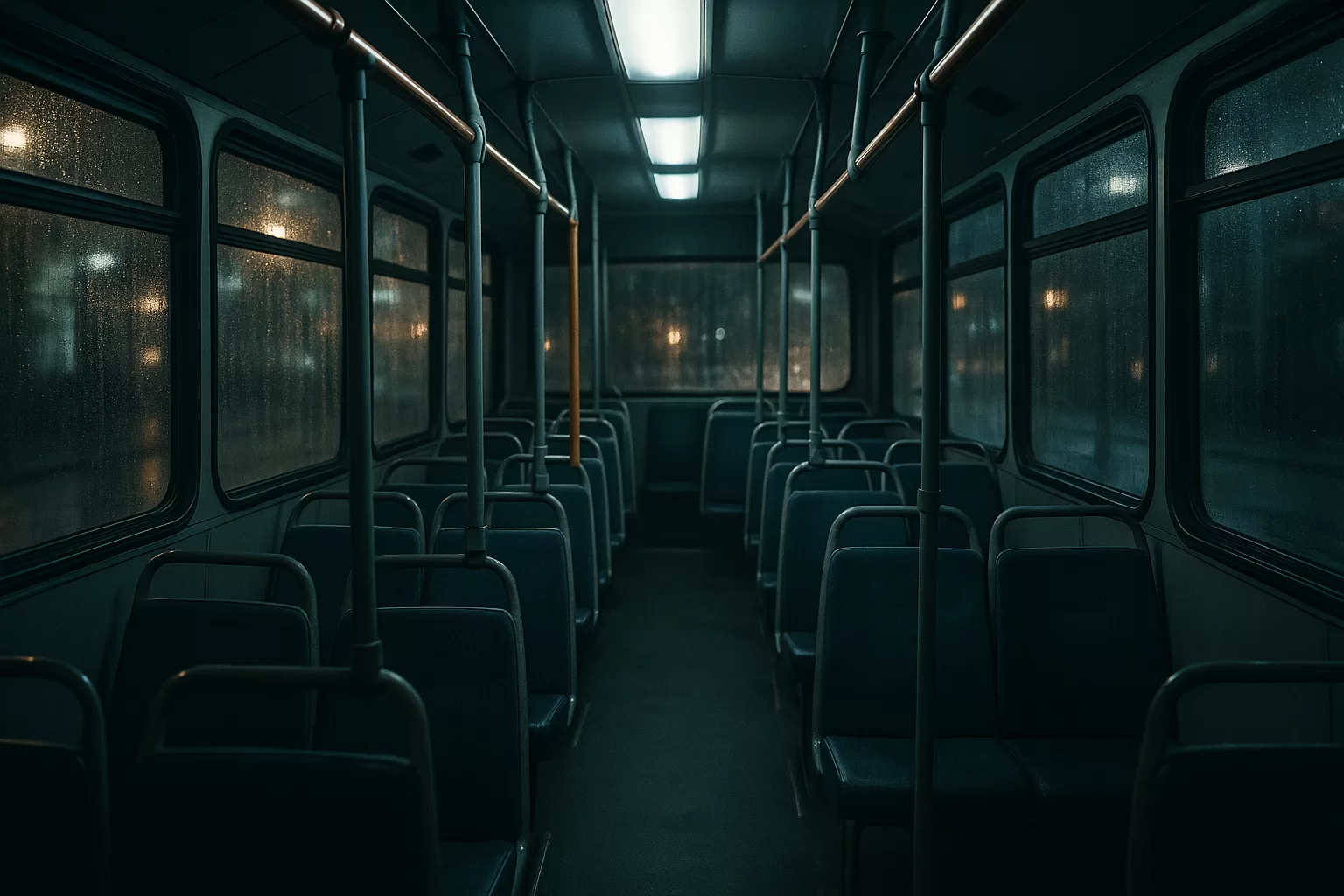
The last bus is never completely silent. Even when no one speaks, it has its own tired language: brakes sighing at red lights, coins shifting in a fare box, rain tapping windows like someone asking to be let in.
This version of The Empty Seat on the Last Night Bus is written as a complete scary story, followed by a compact reading guide, a tension tracker, and night-travel reminders for readers who enjoy urban horror with a practical edge.
Quick Answer
The Empty Seat on the Last Night Bus is a scary story about a commuter named Mara who boards the final bus home after a late shift and notices one open seat that every passenger refuses to take. As the route empties and the driver avoids looking in the mirror, Mara realizes the seat is not merely reserved, unlucky, or broken. It is waiting. The story is best read as quiet public-transit horror: familiar routines become strange, small warnings are missed, and the safest choice is no longer obvious once the doors close.
Personal Action Builder
Answer four quick questions and get a practical next step based on this guide.
Choose the options above, then build a recommendation you can use with the checklist, table, and sources in this guide.
In This Guide
The Empty Seat on the Last Night Bus
Mara Finch missed the 12:10 by six minutes, which meant the 12:40 was her last clean way home. The café had closed late because a customer argued over a receipt, then the espresso machine chose midnight to cough brown water over the counter. By the time she locked the front door, the city had gone shiny and hollow with rain.
The bus stop stood beneath a cracked shelter beside a pharmacy that had been closed for years. A timetable curled behind cloudy plastic. Someone had scratched a sentence into the metal bench: do not sit behind her. Mara read it twice, decided it was drunken nonsense, and kept her eyes on the road.
The stop with no queue
The 46 arrived without its usual groan. Its headlights slid across puddles and made the street look briefly underwater. The driver opened the doors but did not greet her. He was an older man with silver hair and the exhausted posture of someone who had learned not to ask questions after midnight.
Mara tapped her card. The machine beeped too loudly. Half a dozen passengers sat scattered through the bus: a nurse with a paper bag in her lap, a man in a warehouse jacket, two teenagers sharing one pair of earbuds, and a woman in a green coat near the front. All of them looked up when Mara stepped into the aisle. Then all of them looked away from the same place: the left window seat in the second row from the back.
It was the best seat on the bus. Dry, empty, not above a wheel, close enough to the exit. Mara almost took it. But the nurse moved her paper bag to the neighboring seat and said, without lifting her head, There is room here.
Mara smiled politely and sat beside her. The bus pulled away so sharply that the empty seat seemed to lurch forward, as if someone invisible had not been ready.
The seat everyone avoids
For ten minutes, nothing happened except the city passing in wet strips of light. Mara checked her phone. Eleven percent battery. No signal for two blocks, then one bar, then nothing again. The teenagers got off at Carver Street, stepping over the aisle as if it contained a spill only they could see.
At the next stop, a tired man boarded with a suitcase. He moved toward the empty seat, grateful for it, until the driver barked, Not that one. The man froze. No explanation followed. He stood near the pole for three stops, suitcase bumping his knee, while the open seat waited in perfect invitation.
Mara leaned toward the nurse. Is it broken?
The nurse pressed both hands around the paper bag. No.
Then why can’t anyone sit there?
The nurse turned to her with eyes red from a double shift. Because people who sit there get off at a stop that is not on the route.
Mara laughed once, too loudly. The warehouse man flinched. The woman in the green coat whispered something like apology, though Mara could not tell who it was meant for.
The stop not on the route
After the hospital, the bus emptied quickly. The nurse rose at Linden, touched Mara’s shoulder, and said, If he passes your stop, do not ring twice. Ring once and stand by the driver. Then she stepped into the rain and vanished behind the closing doors.
Mara should have gotten off at Maple and walked the extra twelve minutes. She knew that later with the clean certainty people have in stories after the door has already shut. Instead she stayed, because her socks were damp, because she was tired, because home was only four stops away.
The woman in the green coat got off next. The warehouse man followed at the old cinema. That left Mara, the suitcase man, the driver, and the empty seat. The bus heater clicked. The windows clouded. In the reflection, Mara saw the empty seat was no longer empty.
A girl sat there, or the idea of a girl. Pale coat. Wet hair combed flat to her cheeks. Hands folded in her lap with the patience of someone waiting to be noticed. Mara spun around. The seat was empty. In the window, the girl remained.
The suitcase man saw Mara’s face and shook his head slowly. Don’t look in the glass, he whispered.
The next stop should have been Maple. Instead the sign above the driver blinked and changed to a name Mara did not know: Bellwether End. The bus turned down a road that had never been part of the route, past houses with no porch lights and shops with newspapers yellowing behind the glass. The rain stopped. That was worse. Without rain, she could hear a soft tapping from the empty seat.
Tap. Tap. Tap.
Like fingernails on a window. Like a card being offered to a fare machine that would not read it.
Mara stood. Her knees felt unthreaded. She pressed the stop button once. The bell gave a thin, embarrassed chime. The driver did not slow.
Stand by the driver, the nurse had said.
Mara moved up the aisle, keeping her eyes on the rubber floor. The suitcase man whispered, Wait. But his voice sounded far away, as if he had spoken from the back of a tunnel. When Mara reached the front, the driver said, without turning, I told her not to save seats.
Who?
My daughter.
The bus rolled to a stop beside a shelter Mara did not recognize. Beyond it stretched a field of black weeds and a single streetlamp buzzing over nothing. The doors folded open. Cold air entered with the smell of river mud.
In the side mirror, Mara saw the girl rise from the empty seat. She was not looking at Mara. She was looking at the suitcase man, who had sat down without making a sound.
He stared ahead, hands resting on his suitcase. The girl sat beside him. The doors began to close.
Mara grabbed the driver’s sleeve. Open them.
He kept both hands on the wheel. Not for you.
The suitcase man turned his head. His mouth moved around one word: please. But the bus was already pulling away, and the shelter behind them had no road connected to it anymore.
At Maple, Mara stumbled off into rain that had started again as if nothing had paused. The 46’s taillights shrank at the corner. In the rear window, the left seat near the back was empty.
The next morning, Mara called the transit office and asked about the driver with silver hair. They told her there was no such driver on the 46. She described the bus number, the route, the time. The woman on the phone went quiet, then asked if Mara had sat down.
No, Mara said.
The woman exhaled. Good.
That night, Mara found something in the pocket of her coat: a damp paper ticket, though the city had not used paper transfers in years. On the back, in a child’s round handwriting, someone had written: you noticed me.
The scratched bench message looks like vandalism, but it names the rule before Mara understands it. Good urban horror often hides instructions inside things people normally ignore.
Every passenger avoids the same seat. Instead of explaining immediately, the story lets group behavior create pressure. If strangers share one fear, the reader wants to know why.
The girl appears first as a reflection, which makes the threat uncertain. Reflections are useful in scary stories because they show what the character cannot safely face.
The nurse explains only enough to help Mara survive. Partial advice feels realistic in panic and keeps the reader alert for mistakes that may already be happening.
Why This Last Night Bus Story Feels Unsettling
The fear comes from a place many people understand: being tired, nearly home, and dependent on a public route you do not control. A bus is public enough to feel safe, but enclosed enough to feel trapped once the driver passes your stop.
The empty seat also turns a normal commuter decision into a moral test. Sit or stand? Ask questions or stay polite? Trust the warning or trust the schedule? The horror grows because every sensible choice is just a little too late.
Reader note: This is fiction, not a claim about real transit routes. If a ride ever feels unsafe, follow local safety guidance, move near the driver or other passengers when appropriate, and contact transit staff or emergency services if needed.
Another reason the story works is restraint. The ghost does not leap into the aisle. The driver does not give a full confession. The route name Bellwether End suggests a destination without explaining it. That empty space lets readers fill in the worst possibility themselves.
For storytellers, the useful lesson is to make the supernatural follow rules. The seat matters. The mirror matters. Ringing once matters. Clear rules let readers participate, and when a character nearly breaks one, tension rises without needing gore.
Empty Seat on the Last Night Bus Tension Tracker
Use this compact tracker as a reader’s tool or a writer’s checklist. It shows how the story escalates through setting, warnings, choices, and consequences instead of relying on a single jump scare.
On mobile, scan the first column, then compare the clue and mistake columns. The pattern is simple: the more Mara treats the night as ordinary, the more the bus proves it is not.
| Stage | Story clue | Mara’s choice | Risk level | Reader question |
|---|---|---|---|---|
| Bus stop | Scratched warning | Ignores it | Low | Who is her? |
| Boarding | Seat avoided | Sits elsewhere | Rising | Why that seat? |
| Mid-route | Driver snaps | Asks nurse | Uneasy | What stop? |
| Empty bus | Girl in glass | Looks away | High | Is she real? |
| Wrong road | Unknown sign | Rings once | Critical | Can she exit? |
| Afterward | Paper ticket | Keeps proof | Unresolved | Will it return? |
The biggest mistake to avoid when writing this type of story is overexplaining the haunting. A little history can help, but too much turns fear into paperwork. Let one or two concrete objects carry the mystery: a ticket, a route sign, a seat that never stays occupied.
Late-Night Transit Reminders for Real Life
Scary stories borrow from real discomfort, so it is worth separating fiction from practical caution. Public transit is a normal part of daily life for many people, and most rides are uneventful, but late-night travel benefits from planning.
Before relying on any specific route, check current schedules, service alerts, and local safety options because policies change. The Metropolitan Transportation Authority’s safety and security guidance is a useful example of official transit advice focused on awareness, reporting concerns, and knowing how to get help.
Know your stop, nearby landmarks, and a backup place with light or staff. A simple exit plan reduces hesitation if the route changes, service ends early, or you feel uncomfortable.
Keep headphones low enough to hear announcements and movement nearby. Awareness does not mean paranoia; it means noticing changes before they become urgent.
If a vehicle feels too empty, consider sitting closer to the driver or near other calm passengers. Visibility can make it easier to ask for help or exit promptly.
If something feels wrong, do not worry about seeming rude. Move seats, step off in a safer area, contact someone you trust, or report concerns through official channels.
For readers, these reminders also explain why the story lands: Mara’s dread is not foolish. She is trying to balance politeness, fatigue, cost, weather, and uncertainty, which is exactly how small risks become hard to judge at night.
Summary and Final Thoughts
The Empty Seat on the Last Night Bus uses a familiar setting to create a quiet trap. The horror is not only the ghostly girl or the impossible stop; it is the moment when Mara realizes the route has rules no timetable will show.
Its best lesson is simple: effective scary stories make ordinary objects feel newly dangerous. A seat, a bell, a mirror, and a ticket are enough when each one changes meaning by the end.
FAQ
Is The Empty Seat on the Last Night Bus based on a true story?
No, this version is original fiction written for readers who enjoy urban scary stories. It uses realistic late-night transit details to feel grounded, but the haunting, route, characters, and impossible stop are invented for suspense.
What does the empty seat symbolize in the story?
The empty seat represents temptation, denial, and the danger of ignoring shared warnings. It looks like comfort after a long shift, but it is really a boundary. The more characters avoid explaining it, the more powerful it becomes.
Why does Mara survive when the suitcase man does not?
Mara survives because she listens to the nurse’s partial rule, rings once, and moves toward the driver. The suitcase man breaks the central boundary by sitting down, which makes him available to the passenger who should not be there.
What makes a bus setting effective for horror?
A bus combines public space with limited control. You can see other people, but you cannot choose the route, speed, or stops. At night, that ordinary dependence becomes frightening because escape depends on someone else opening the doors.
Can I use the tension tracker for writing my own scary story?
Yes. Treat it as a structure tool: introduce a normal place, add a small warning, make the character choose, then reveal the cost of that choice. Keep clues concrete and avoid explaining the mystery too early.
Sources and Further Reading
- Scary Story About Two Sisters: Shadows in the Old House
- Why Do I Keep Waking Up After Strange Dreams at Night?
- Meditation Music For Sleep And Healing: Path To Restful Nights
- Calm Rainy Night: Gentle Ambient Music And Rain Sounds For Peaceful Sleep
- Metropolitan Transportation Authority – Safety and Security