Key Takeaways
- Low-light hanging plants are ideal for apartments because they save floor space and tolerate indirect light.
- Low light does not mean no light. Most plants still need a nearby window or a grow light to stay healthy.
- Pothos, heartleaf philodendron, spider plant, syngonium and Monstera adansonii are some of the easiest trailing options.
- Boston fern needs more humidity and moisture than pothos or philodendron, so it is better for bathrooms or humid corners.
- Many common hanging plants are toxic to cats and dogs if chewed, so pet safety should guide placement.
Quick Answer
The best low-light hanging plants for urban spaces are pothos, heartleaf philodendron, spider plant, syngonium, Monstera adansonii and Boston fern. Choose pothos or philodendron if you want the easiest option, spider plant if you want a more pet-friendly choice, and Boston fern if your home has humidity and you can water more consistently.
Understanding Apartment Light
| Window direction | Typical light | Best plant approach | Watch for |
|---|---|---|---|
| North-facing | Gentle, indirect, lower light | Pothos, philodendron, spider plant, syngonium; add a grow light if growth is weak. | Slow growth, smaller leaves, leaning toward light. |
| East-facing | Soft morning sun | Excellent for many low-light hanging plants. | Drying faster near the glass in summer. |
| South-facing | Brightest and often direct sun | Place low-light plants a few feet back or behind a sheer curtain. | Scorched leaves and crispy edges. |
| West-facing | Strong afternoon light | Use distance from window or filtered light. | Hot afternoon sun, especially in summer. |
| No window | Not enough natural light for most plants | Use an LED grow light on a timer. | Decline over time without artificial light. |
Simple test: If you can comfortably read a book during the day without switching on a lamp, many low-light plants may survive there. If not, use a grow light.
Best Low-Light Hanging Plants
| Plant | Light tolerance | Watering style | Pet note | Original care video |
|---|---|---|---|---|
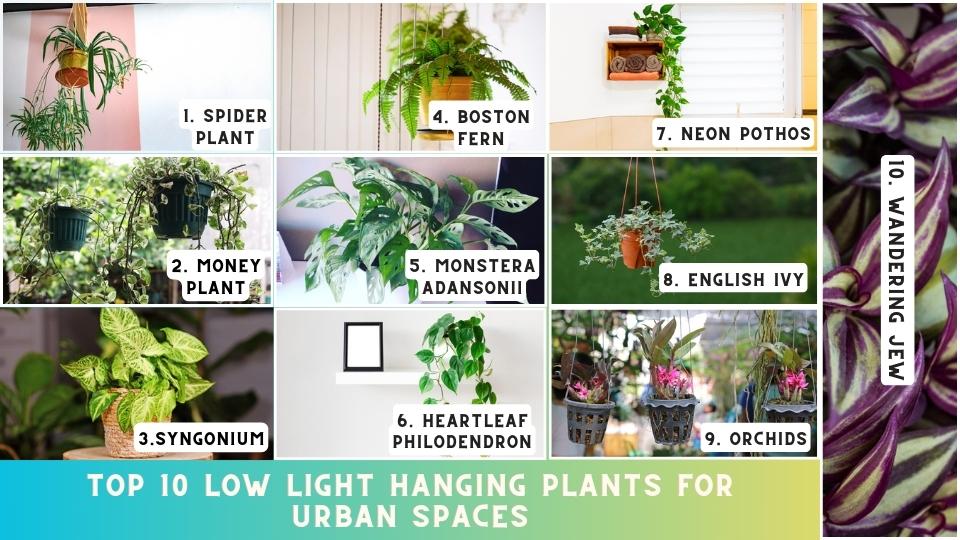
| Spider Plant | Low to bright indirect | Water when top 1–2 inches dry | Often considered a better pet-friendly pick | Watch tips |
| Pothos / Money Plant | Very tolerant, best in indirect light | Let soil dry slightly | Toxic if chewed by pets | View care guide |
| Syngonium | Low to medium indirect | Water when top 1–2 inches dry | Toxic if chewed by pets | Watch now |
| Boston Fern | Indirect light, dislikes harsh sun | Keep evenly moist | Usually better around pets, but confirm with your vet | Discover secrets |
| Monstera adansonii | Medium to bright indirect; tolerates lower light | Water when top inch dries | Toxic if chewed by pets | See how |
| Heartleaf Philodendron | Low to medium indirect | Let top soil dry | Toxic if chewed by pets | Dive in |
| Neon Pothos | Medium indirect keeps colour brightest | Let top soil dry | Toxic if chewed by pets | Learn here |
| English Ivy | Bright indirect to moderate light | Keep lightly moist, not soggy | Toxic if chewed by pets | View guide |
| Orchids | Bright indirect; not true low-light plants | Water by orchid type and medium | Many common orchids are less risky for pets, but verify species | Click and grow |
| Tradescantia zebrina | Medium indirect for best colour | Water when top soil dries | Can irritate pets if chewed | Unearth tips |
Best beginner pick
Pothos is hard to beat because it tolerates missed watering, lower light and pruning well.
Best pet-conscious pick
Spider plant is a better choice for homes with curious pets, though placement still matters.
Best humid-room pick
Boston fern works well in bathrooms with indirect light and steady moisture.
Best dramatic trailing look
Monstera adansonii and heartleaf philodendron create long, lush trails when they get enough light.
Low-Light Plant Finder
Choose your situation and get a quick plant recommendation.
Care Routine for Low-Light Hanging Plants
- Check soil before watering. Most hanging plants do better when the top 1–2 inches dry first.
- Use drainage. Hanging pots should not leave roots sitting in water.
- Rotate the pot weekly. This keeps growth more even when light comes from one side.
- Prune long vines. Pinching tips encourages fuller growth and prevents thin, leggy trails.
- Dust the leaves. Dust blocks light, which matters even more in low-light rooms.
- Fertilise lightly. Feed during active growth and reduce fertiliser in winter or very low light.
- Watch humidity. Ferns and some tropical plants may need more humidity than pothos or philodendron.
Common Problems and Quick Fixes
| Problem | Likely cause | Fix |
|---|---|---|
| Yellow leaves | Overwatering, poor drainage, low light or old leaves | Check roots, let soil dry more, improve drainage and move closer to light. |
| Brown crispy tips | Underwatering, low humidity, salts or harsh sun | Water consistently, flush soil occasionally and move away from direct sun. |
| Leggy vines | Not enough light or no pruning | Move closer to a window or grow light and prune back long stems. |
| Small new leaves | Weak light or low nutrients | Increase indirect light and fertilise lightly during growing season. |
| Gnats | Soil kept too wet | Let the top layer dry, improve airflow and avoid constant soggy soil. |
| Drooping | Underwatering, overwatering or root stress | Check soil moisture before adding more water. |
Pet and Child Safety
Many popular trailing plants are beautiful but not safe for chewing. If you have cats, dogs or small children, hang plants high enough that they cannot be reached, clean fallen leaves quickly and check each species before buying.
Pet note: Pothos, philodendron, syngonium, English ivy and Monstera adansonii can be toxic if chewed by pets. Spider plant is usually a safer choice, but any plant can cause stomach upset if eaten in large amounts.
Planters, Soil and Supplies
The original article included several brands and services for plant shopping, soil, fertiliser, hanging planters and gardening help. Useful options include Urban Jungle, Miracle-Gro, FoxFarm, West Elm, Gardener's Supply Company, The Sill, Etsy and Amazon.
Best hanging pot features
Choose lightweight pots with drainage, a secure hanger, a saucer or removable cachepot, and enough root room.
Best soil style
Most trailing houseplants like a well-draining indoor mix. Ferns prefer moisture-retentive but not swampy soil.
When to use a grow light
Use one when leaves shrink, vines get leggy, colour fades, or the room has no bright reading light during the day.
When to repot
Repot when roots circle the pot, water runs through instantly, or growth stalls during the growing season.
FAQs About Low-Light Hanging Plants
What are the best low-light hanging plants for apartments?
Good options include pothos, heartleaf philodendron, spider plant, syngonium, Boston fern, Monstera adansonii and some Tradescantia varieties.
Can hanging plants survive in a room with no windows?
Most houseplants cannot thrive long-term in a completely windowless room without a grow light. A small LED grow light can make a big difference.
How often should I water low-light hanging plants?
Most should be watered only when the top 1–2 inches of soil feel dry. Ferns may need more even moisture, while pothos and philodendrons prefer to dry slightly between waterings.
Which low-light hanging plants are safest for pets?
Spider plants are commonly considered a better pet-friendly choice, but many popular trailing plants such as pothos, philodendron, syngonium, English ivy and Monstera adansonii can be toxic to cats or dogs if chewed.
Why are my hanging plant leaves turning yellow?
Yellow leaves often come from overwatering, poor drainage, low light, cold drafts, pests or natural old-leaf shedding.
Should I fertilise low-light hanging plants?
Yes, but lightly. Plants in lower light grow more slowly, so they usually need less fertiliser than plants in bright light.
Sources and Further Reading
- University of Minnesota Extension: Lighting for Indoor Plants
- University of Missouri Extension: Caring for Houseplants
- ASPCA: Toxic and Non-Toxic Plants
- RHS: Houseplant Care
- What to Do With Incense Ashes
- Love Spell Herbs
- Processed Foods and Their Natural Replacements
- How to Make a Protection Bracelet
Affiliate and plant-care disclosure: This article may contain affiliate links, including links to plant supplies, planters, soil and marketplaces. If you click and make a purchase, ChipJourney may earn a small commission at no extra cost to you. Plant care varies by home, climate, potting mix and species. Check pet toxicity before bringing plants into homes with cats, dogs or small children.