Key Takeaways
- Everyday symbols of good luck often work more as reminders of hope, attention, and intention than as guaranteed charms.
- The same symbol can mean different things across cultures, so context matters before you wear, gift, or display one.
- Common lucky symbols like clovers, horseshoes, ladybugs, and coins usually connect to protection, abundance, fertility, or safe travel.
- Choosing one symbol that fits your goal is often more meaningful than collecting many unrelated lucky objects.
- Use good luck symbols respectfully, especially when they come from living spiritual traditions rather than general folklore.
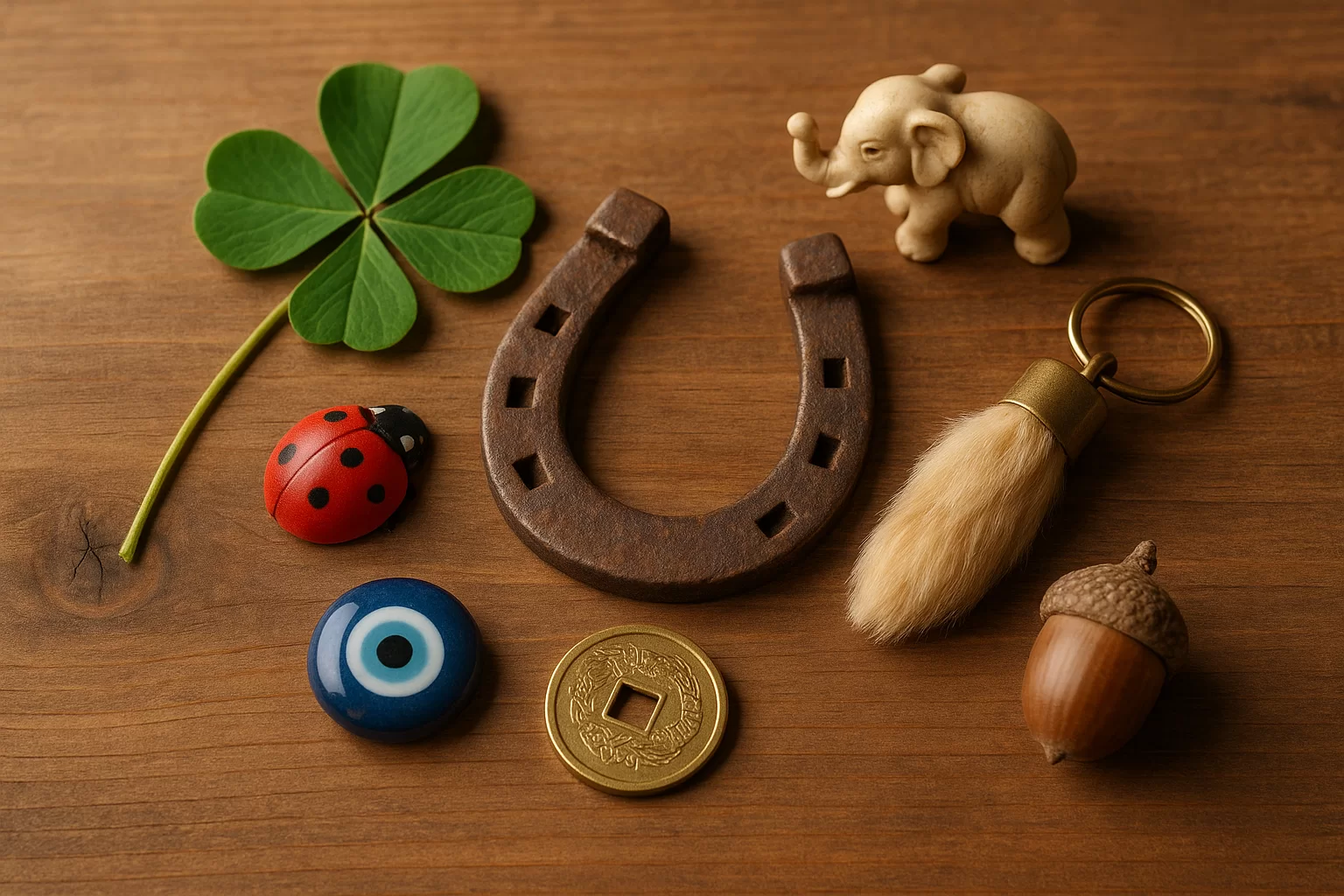
People have always looked for small signs of hope in ordinary objects. A penny on the sidewalk, a ladybug on a sleeve, or a horseshoe by a doorway can feel like more than decoration because symbols help turn big wishes into something visible and memorable.
This guide explains the most common everyday symbols of good luck, what they usually mean, and how to use them in a practical, thoughtful way without expecting magic on demand.
Quick Answer
Everyday symbols of good luck are familiar objects, animals, or signs that people associate with protection, prosperity, love, health, or favorable timing. Popular examples include four-leaf clovers for rare fortune, horseshoes for protection, ladybugs for blessings, lucky pennies for unexpected gain, elephants for wisdom and stability, and evil eye charms for warding off harm. Their meaning comes from folklore, religion, habit, and cultural storytelling. For most people, these symbols matter because they encourage optimism, attention, gratitude, and intentional action rather than guaranteeing a specific outcome.
Personal Action Builder
Answer four quick questions and get a practical next step based on this guide.
Choose the options above, then build a recommendation you can use with the checklist, table, and sources in this guide.
In This Guide
Common Everyday Symbols of Good Luck
Many everyday symbols of good luck became popular because they are easy to spot, easy to carry, and easy to remember. Some are tied to nature, some to protection, and others to money or safe passage. Their staying power comes from the way they connect emotion to routine life.
The table below gives a quick reference, then the cards highlight nuance that people often miss when they use lucky symbols casually.
| Symbol | Common Meaning | Best For | Where Seen | Watch Out For |
|---|---|---|---|---|
| Four-leaf clover | Rare fortune | Fresh starts | Gardens, charms | Confused with shamrock |
| Horseshoe | Protection, luck | Home entry | Doors, walls | Different hanging beliefs |
| Ladybug | Blessing, renewal | Hope, love | Nature, art | Not every beetle is symbolic |
| Lucky penny | Small gain | Money mindset | Roads, jars | Superstition can become rigid |
| Elephant | Wisdom, stability | Home, career | Figurines, decor | Trunk direction varies by tradition |
| Evil eye charm | Protection | Boundaries | Jewelry, homes | Respect living traditions |
Four-leaf clover
This symbol is linked with rare luck because finding one is uncommon. It suits moments when you want courage for a new opportunity, not passive waiting for miracles.
Horseshoe
Often placed near a doorway, a horseshoe symbolizes protection and good fortune entering the home. Some hang it upward to hold luck, while others hang it downward to pour blessings.
Ladybug
Ladybugs are widely seen as signs of gentle luck, timing, and renewal. People often connect them with spring, fertility, or a reminder that small positive changes are still meaningful.
Lucky penny
A coin found unexpectedly can symbolize value hiding in plain sight. It works best as a gratitude cue: small wins count, and attention often notices opportunities before fear does.
Other familiar symbols also appear often in daily life. Acorns can represent growth from small beginnings, rabbits suggest fertility and quick fortune, and fish may symbolize abundance in some traditions. If you are interested in related imagery, ChipJourney's Dream Meaning About Fish: Symbols, Signs & Context explores how a fish symbol can carry prosperity and emotional meaning in another setting.
One useful distinction: a shamrock and a four-leaf clover are not the same symbol. A shamrock typically has three leaves and carries strong Irish cultural and religious associations, while a four-leaf clover is the rarer plant most people mean when talking about luck.
How to Choose Everyday Symbols of Good Luck for Your Goal
The most effective symbol is usually the one that matches your intention and feels natural in your environment. Instead of asking which charm is “most powerful,” ask what kind of reminder you need: courage, protection, patience, abundance, healing, or steadiness. A symbol works better when it supports a behavior you can actually practice.
Use this simple tool: pick one goal, one symbol, and one place for it. For example, a coin in your wallet can remind you to save consistently, while a small elephant on your desk may support patient decision-making during stressful work weeks.
Quick matching tool: Choose a horseshoe for home protection, a coin for financial awareness, a clover for hopeful change, a ladybug for renewal, an elephant for long-term stability, or an evil eye charm for energetic boundaries and caution around jealousy.
For money goals
Use a coin, acorn, or fish symbol if your real focus is budgeting, earning, or long-term growth. Pair the symbol with one concrete weekly money habit.
For home energy
Choose a horseshoe, elephant, or protective charm near an entryway. Keep the area clean so the symbol feels intentional rather than forgotten decor.
For confidence
A four-leaf clover or ladybug can support fresh starts, interviews, or travel days. Small portable symbols work well when you need encouragement outside the home.
For spiritual reflection
If luck for you is tied to prayer and inner alignment, a devotional practice may matter more than an object alone. The symbol becomes a prompt, not the whole practice.
If your idea of luck includes faith and prayer, a spiritual resource may feel more grounded than collecting charms. Some readers prefer devotional tools such as Rose Grail Prayer or Miracle Prayers Discovery as a more intentional way to connect hope with daily action.
Current-check reminder: trends change quickly online, and symbolic advice is often repeated without context. Before buying a charm because a video promised instant luck, check whether the symbol has a real cultural background, whether the seller explains it clearly, and whether your goal would be better served by a practical habit first.
How to Use Lucky Symbols Without Becoming Superstitious
Lucky symbols are most helpful when they stay in the role of support rather than control. They can calm nerves, focus attention, and reinforce values, but they should not replace planning, medical advice, financial judgment, or difficult conversations. The healthier mindset is “this helps me stay centered,” not “this guarantees success.”
A good rule is to attach your symbol to an action. Put a lucky penny beside your budget notebook, hang a horseshoe near a front door you actively maintain, or wear a charm on days when you are already choosing courage. The action gives the symbol a meaningful job.
Practical routine: name your intention, place the symbol where you will see it, and pair it with one repeatable step. That simple loop turns a passive object into a useful cue.
Many people also use symbols as social gifts. A ladybug card for someone starting over, a small elephant for a new office, or a clover bookmark before exams can feel thoughtful because the meaning is clear without being heavy-handed. If you do this, explain the meaning briefly so the gift feels personal rather than random.
For readers interested in prosperity symbolism more broadly, Attracting Money Symbols: Unlock Prosperity With Ancient Wisdom offers a related look at abundance-focused imagery and how people use those symbols in everyday settings.
Mistakes to Avoid and Cultural Nuance to Respect
The first common mistake is treating every “lucky symbol” list online as universal truth. A rabbit, coin, eye charm, or elephant may have different meanings depending on region, religion, family tradition, or even how the item is positioned. When a symbol comes from a living culture, casual use without understanding can feel flattening or disrespectful.
The second mistake is outsourcing responsibility to the symbol itself. If a charm makes you feel calmer before a big choice, that is useful. If it keeps you from making the choice carefully, it is no longer helping. Luck symbols should support wise action, not suspend it.
Do not force a fit
If a symbol feels trendy but empty to you, skip it. A plain object with real personal meaning usually works better than a fashionable charm with no connection.
Learn the origin
Especially with protective symbols, take a minute to learn where the belief comes from. Respect matters more than aesthetics when a symbol has religious or cultural depth.
Avoid fear spirals
Do not assume bad luck because a charm breaks, gets lost, or is placed “wrong.” Replace it if you want, then return to practical decisions and steady routines.
Keep expectations realistic
Symbols can improve focus and confidence, but they do not erase risk. Good timing still benefits from preparation, healthy boundaries, and common sense.
There is also a difference between decorative symbolism and active spiritual practice. Some people enjoy symbols as folklore or family tradition. Others see them as devotional tools connected to prayer, ritual, or manifestation. If you lean toward the second approach, keep your practice consistent and grounded rather than collecting one-off promises from social media. Readers exploring that lane sometimes also compare mindset products such as Good Vibes Manifestation Review: Unlock the Power of Abundance.
Finally, remember that lucky symbolism evolves. A coin may now symbolize mindful spending instead of old-fashioned superstition; an elephant may represent emotional steadiness in a chaotic work life; and a clover may simply remind someone to stay open to opportunity. Meaning stays alive when it remains useful.
Summary and Final Thoughts
Everyday symbols of good luck endure because they make hope visible. Whether you prefer a four-leaf clover, horseshoe, coin, ladybug, elephant, or protective charm, the strongest choice is the one that fits your values, your goal, and your daily habits.
Use symbols as gentle anchors, not guarantees. When they are chosen with respect and paired with action, they can become small but steady reminders to notice opportunity, protect your energy, and move through life with more intention.
FAQ
What is the most common symbol of good luck?
The four-leaf clover is one of the most recognized good luck symbols because it is both familiar and rare. That rarity gives it a strong link to fortunate timing, surprise opportunity, and the feeling of finding something special when you were not expecting it.
Are good luck symbols the same in every culture?
No. Meanings vary widely by region, religion, language, and family tradition. A symbol that represents protection in one culture may mean prosperity or celebration in another, so it is wise to check the background before wearing, gifting, or displaying it publicly.
Can lucky symbols actually change your life?
They may influence your mindset more than events themselves. A symbol can boost confidence, reduce stress, and keep your attention on helpful habits, which can indirectly change outcomes. It is best to think of lucky symbols as support tools, not guaranteed solutions.
Where should I place a good luck symbol at home?
Place it where its meaning matches your routine. Entryways suit protective symbols like horseshoes, workspaces suit coins or elephants for focus and stability, and bedrooms may suit gentler symbols linked to peace, love, or emotional comfort.
Is it bad luck to buy your own lucky charm?
Not necessarily. Many people choose their own symbol intentionally because the meaning matters more than who purchased it. What helps most is selecting something you will actually use as a reminder, instead of treating the object like a shortcut around effort.