
Key Takeaways
- Cat sleeping positions are clues, not medical diagnoses. They can suggest comfort, trust, warmth, alertness, stress, or a desire for security.
- Belly-up sleeping often means trust, but it does not always mean your cat wants belly rubs.
- Loafing usually means relaxed but ready. A cat in loaf position may be resting lightly while still watching the room.
- Curled-up sleeping helps cats stay warm and protected, especially in cooler rooms or new environments.
- Sudden changes matter more than one cute pose. If your cat starts hiding, sleeping far more than usual, breathing strangely, or avoiding normal spots, a vet check is wise.
- A good cat sleep setup includes warmth, quiet, hiding choices, clean bedding, and safe elevated or enclosed spaces.
Cats can make sleep look like an Olympic sport. One minute your cat is curled up like a cinnamon roll, the next they are upside down with all four paws in the air, then suddenly they are squeezed into a cardboard box that looks far too small. These positions are adorable, but they can also give you small clues about how your cat feels.
This guide explains cat sleeping positions meaning in a practical, pet-owner-friendly way. You will learn what common poses can suggest about trust, warmth, alertness, comfort, anxiety, and health, while also knowing when a sleeping change deserves more attention.
Quick Answer: What Does Your Cat’s Sleep Position Mean?
Your cat’s sleep position can reflect how safe, warm, relaxed, or alert they feel. A curled-up cat may be conserving warmth and protecting the belly, a belly-up cat is often showing deep trust, and a cat sleeping in a box or tight space may be seeking security. The most important thing is to compare the position with your cat’s normal behaviour, appetite, energy level, breathing, and mood.
Why Do Cats Sleep So Much?
Cats are natural energy savers. Their wild ancestors needed bursts of speed and focus for hunting, so long periods of rest helped them conserve energy. Domestic cats still carry this instinct, even if their biggest daily challenge is chasing a toy mouse across the living room.
Many adult cats sleep for a large part of the day, while kittens and senior cats often sleep even more. Sleep can be affected by age, temperature, activity level, stress, illness, household changes, and how mentally stimulated your cat is when awake.
Important note: This article is for general understanding. It should not replace veterinary advice. If your cat suddenly sleeps much more, hides more, eats less, breathes strangely, cries, limps, or seems unwell, speak to your vet.
Cat Sleeping Positions Meaning
1. The Loaf Position: “I’m Resting, But I’m Ready”
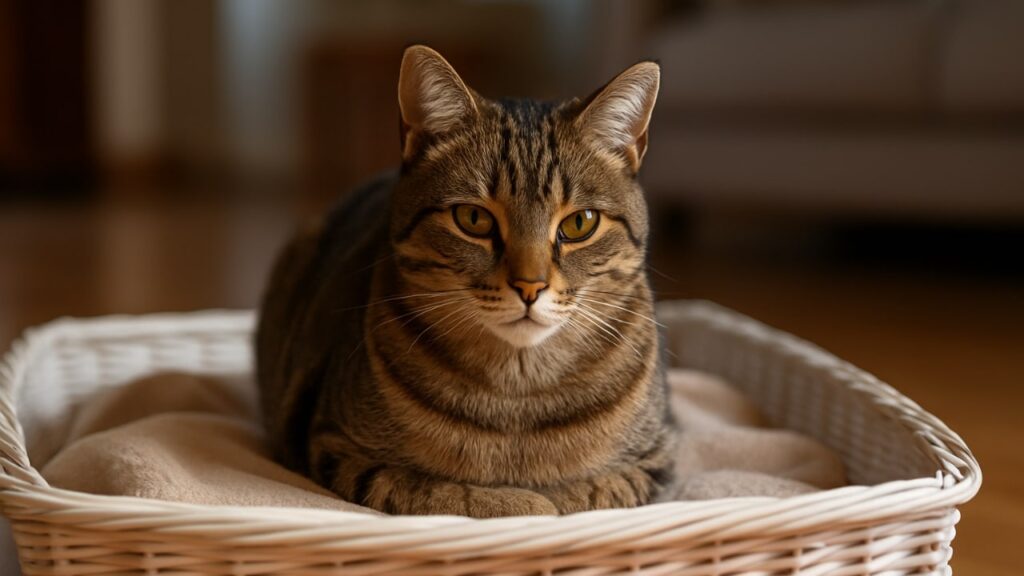
The loaf is one of the classic cat sleeping positions. Your cat tucks their paws neatly underneath the body, sits compactly, and looks like a little bread loaf.
What it usually means: your cat is comfortable enough to rest, but not fully switched off. Because the paws are tucked in, the cat is warm and calm, but can still stand up quickly if something interesting happens.
- Often seen during light naps.
- Can mean your cat feels safe but observant.
- Helps keep paws and body heat tucked in.
If your cat loafs near you, it can be a lovely sign of quiet trust. They may not want full snuggles at that moment, but they are comfortable sharing your space.
2. Curled-Up Ball: “Keep Me Warm and Safe”
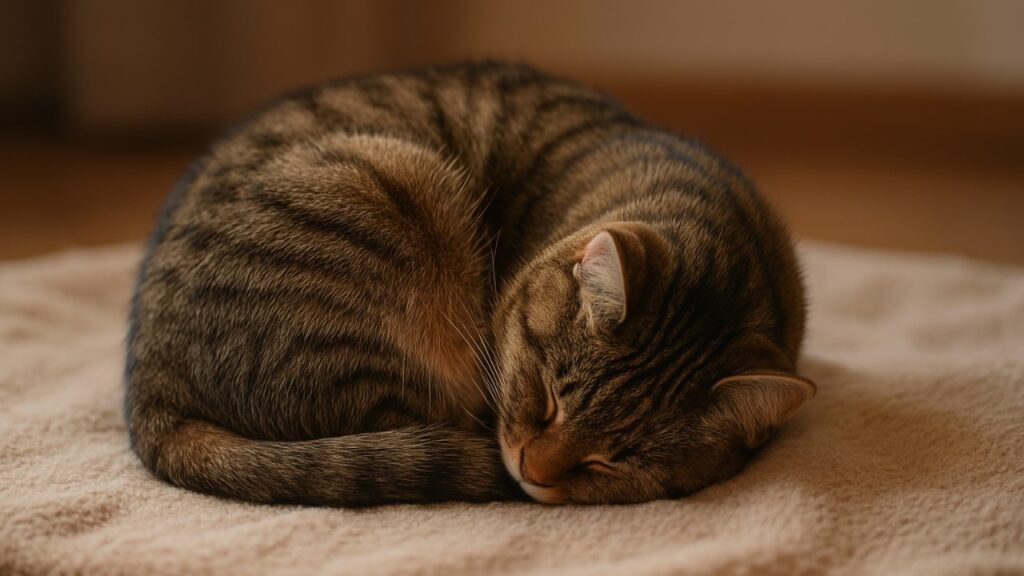
When a cat curls into a tight ball with the tail wrapped close, they are protecting the most vulnerable part of the body: the belly. This position also helps conserve warmth.
What it usually means: your cat wants comfort, security, and warmth. It is common in cooler weather, new surroundings, or when your cat wants to feel tucked away.
- Common in cold rooms or draughty spaces.
- Can be used by confident cats and shy cats alike.
- Often means your cat wants to rest without being disturbed.
Affiliate note: Want to understand your cat’s signals beyond sleep positions? Discover this cat communication guide here.
3. Belly-Up Sleeping: “I Trust You Completely”
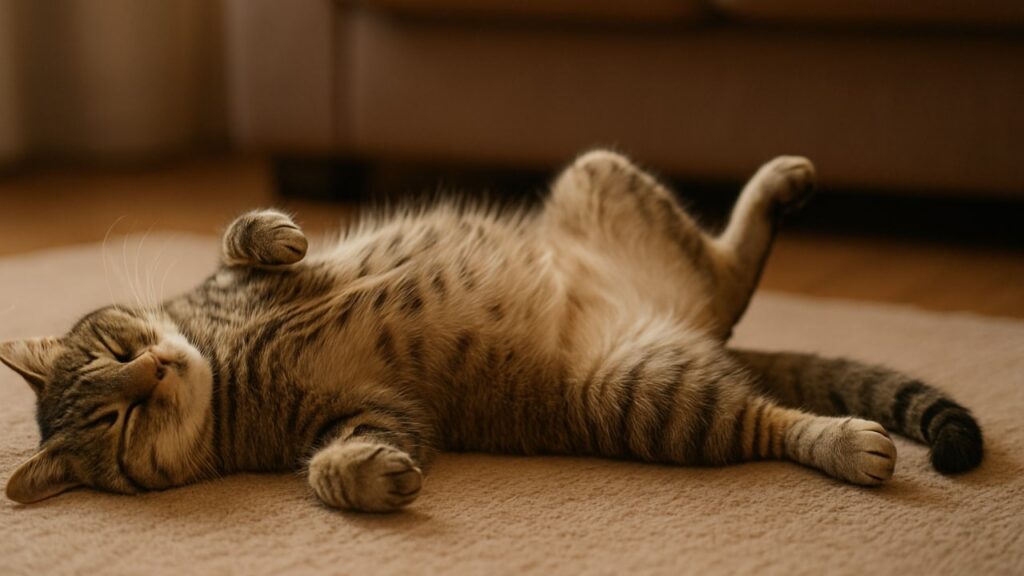
A cat sleeping on their back with the belly exposed is one of the biggest signs of comfort. The belly is a vulnerable area, so cats do not usually expose it when they feel unsafe.
What it usually means: your cat feels secure in the room and trusts the people around them. They may also be cooling down, stretching, or simply enjoying a deep relaxed nap.
- Often seen in confident cats.
- Can mean strong trust in the household.
- Does not automatically mean “please rub my belly”.
Some cats love gentle belly rubs, but many do not. If your cat grabs your hand, kicks, bites, or flicks the tail, respect the boundary and admire the pose from a safe distance.
4. Side Sleeper: “I’m Comfortable and Settled”
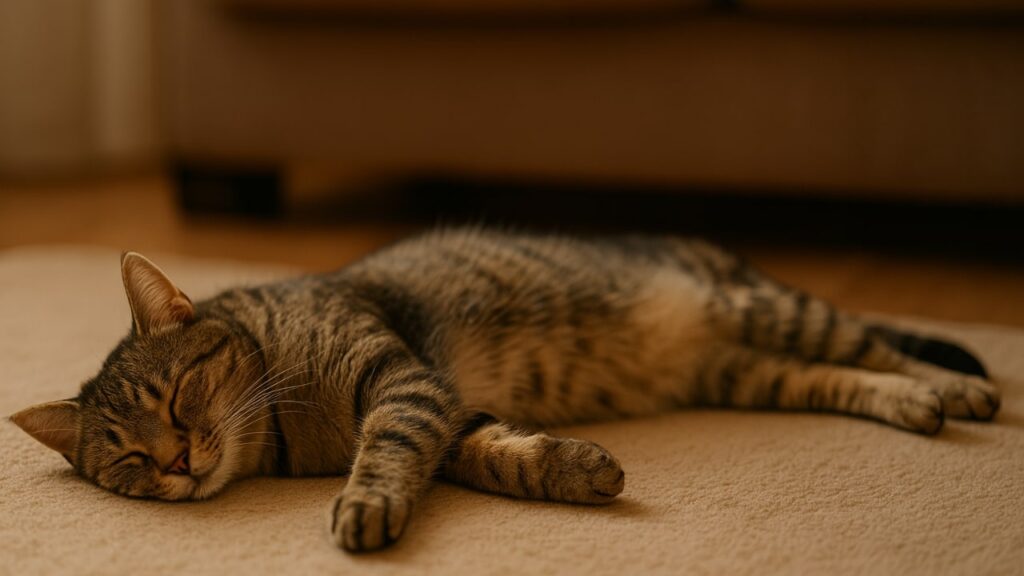
A cat sleeping on the side, with legs relaxed and body stretched out, is usually very comfortable. This pose exposes part of the belly and makes it harder to jump up instantly, so it often signals deeper rest.
What it usually means: your cat feels relaxed, safe, and at home. Side sleeping is a common position for cats enjoying a proper nap rather than a quick doze.
- Often linked with deep sleep.
- May include gentle twitching during dream phases.
- Common after play, meals, or warm sunbathing.
5. Paws Over Eyes: “The Light Is Too Much”
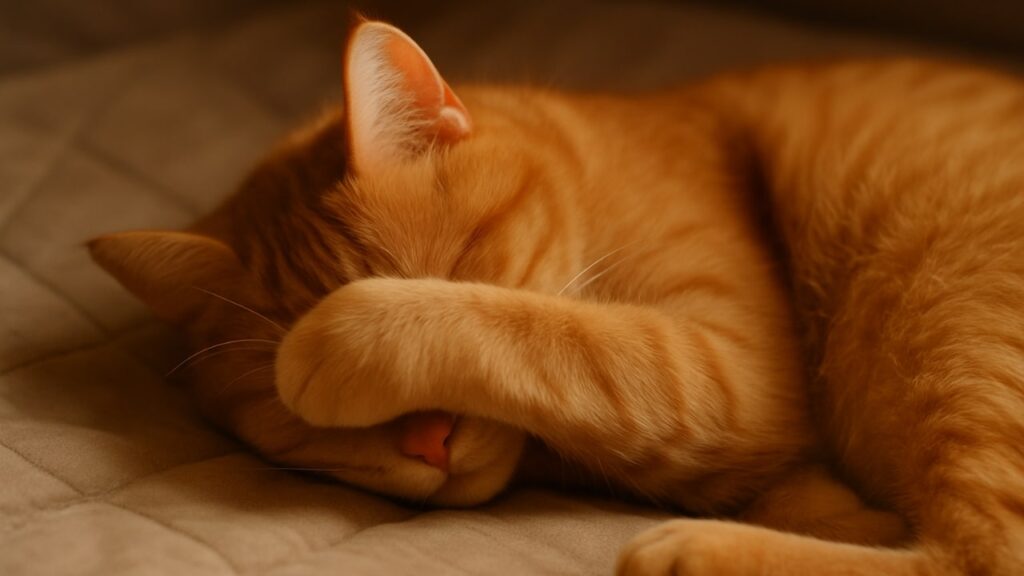
Few things are cuter than a cat covering their face with one paw. It often looks dramatic, but the reason can be simple: light, movement, or the desire to block out the world for a better nap.
What it usually means: your cat wants a darker, calmer sleep space. The paw works almost like a tiny eye mask.
- Often happens in bright rooms or sunny spots.
- Can mean your cat is settled and sleepy.
- May also help keep the nose warm.
6. The Contortionist Stretch: “I Feel Safe Enough To Be Weird”
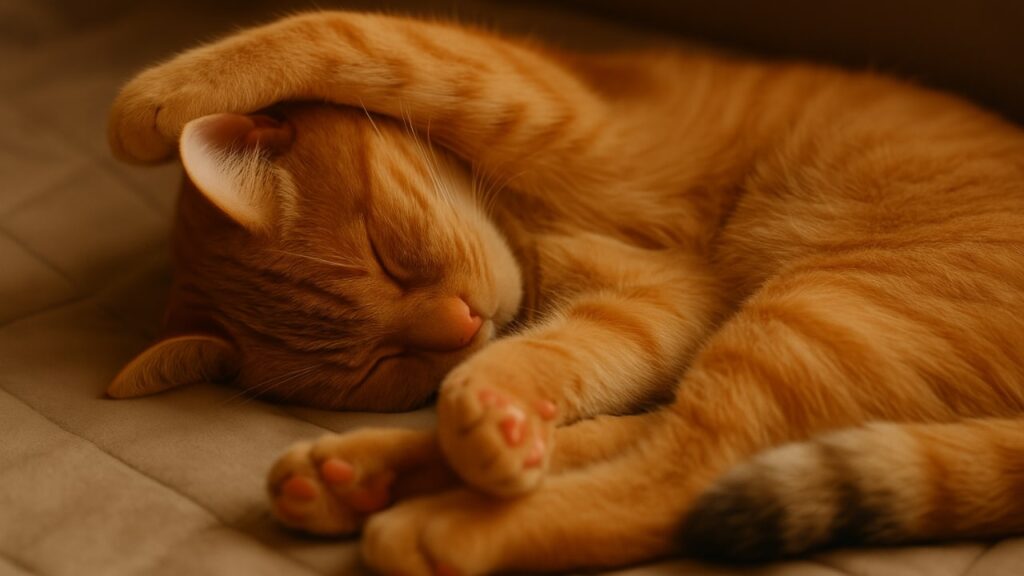
Some cats sleep in positions that look physically impossible: one paw over the head, spine curved, back legs in a different postcode. Cats are flexible, and they often choose strange poses simply because they can.
What it usually means: your cat is relaxed, playful, warm, and comfortable enough not to worry about looking dignified.
- Can happen after play or stretching.
- May help your cat cool down.
- Usually a sign of comfort if your cat moves normally when awake.
Affiliate note: If litter box accidents are disrupting your cat’s comfort at home, learn about this cat peeing solution here.
7. Sleeping On You or Next To You: “You’re My Safe Place”
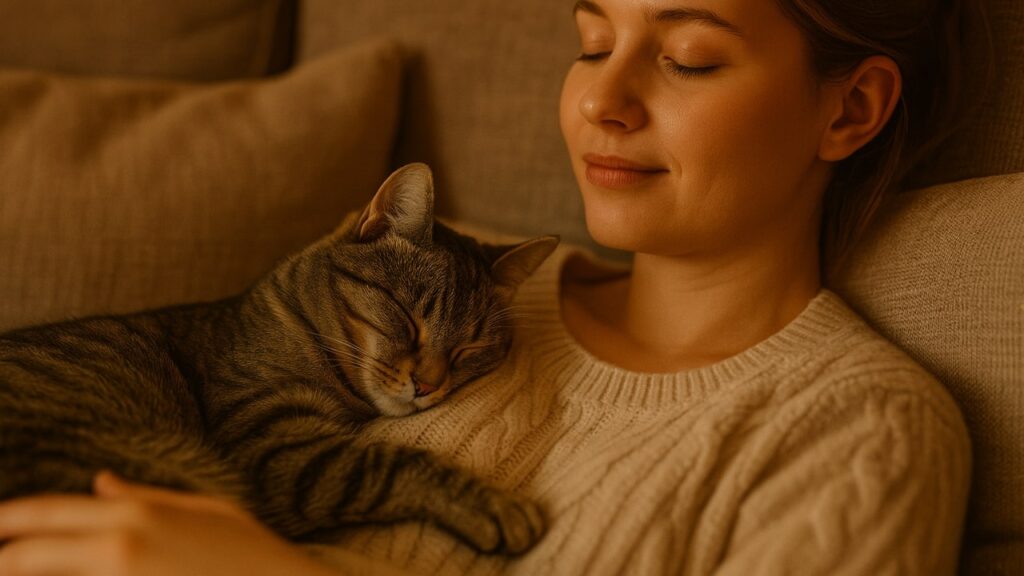
If your cat sleeps on your chest, lap, legs, pillow, or right beside you, take it as a compliment. Cats are selective about where they rest, especially when they are deeply asleep.
What it usually means: your cat associates you with warmth, scent, safety, routine, and emotional comfort.
- Sleeping near you can be a bonding behaviour.
- Your body heat makes you a very attractive nap spot.
- Your scent and breathing rhythm may feel reassuring.
This does not mean every independent cat is less loving. Some cats show affection by sleeping nearby rather than directly on you.
8. Sleeping In Boxes or Tight Spaces: “I Need Security”

Boxes, baskets, cupboards, laundry piles, and small cat caves can feel safer than wide open spaces. Enclosed spots give cats walls around them, fewer exposed angles, and a stronger sense of control.
What it usually means: your cat wants warmth, privacy, and protection. This is often normal and healthy, especially if your cat still eats, plays, and interacts normally.
- Great for cats who like privacy.
- Useful for anxious cats who need retreat options.
- Can become concerning if your cat suddenly hides all day and avoids normal routines.
9. Half-Closed Eyes and Twitching: “I’m Resting, But Still Aware”
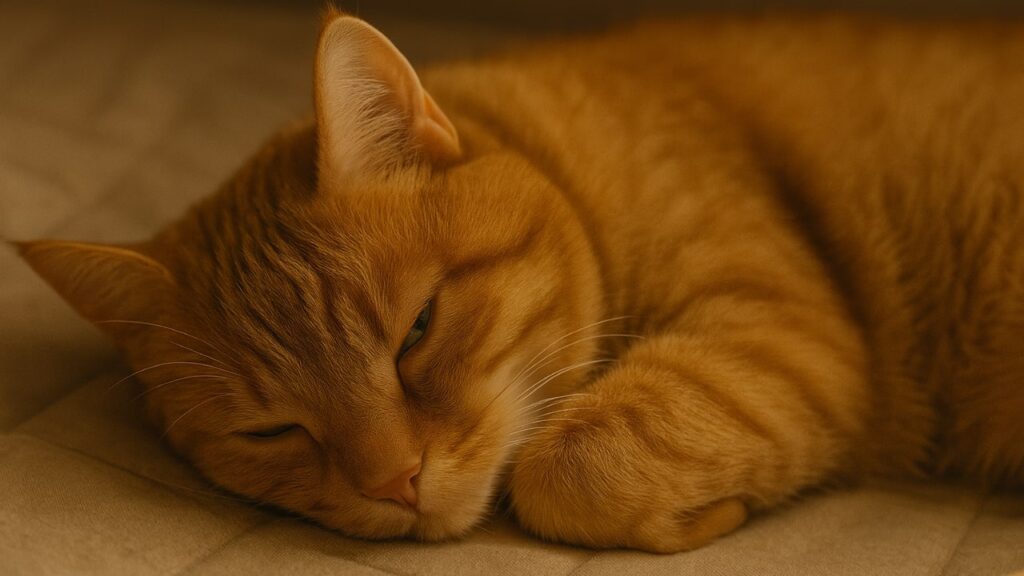
Cats often drift between light sleep and deeper sleep. You may notice whisker twitches, paw movement, little tail flicks, or half-closed eyes.
What it usually means: your cat may be dreaming, processing sounds, or staying lightly aware of the environment while resting.
- Small twitches are usually normal during sleep.
- Half-open eyes can happen during light rest.
- Strong shaking, distress, collapse, or unusual movements should be discussed with a vet.
Quick Comparison: Cat Sleeping Positions and Meanings
| Sleeping Position | Common Meaning | What To Watch |
|---|---|---|
| Loaf | Relaxed but alert | Normal if your cat is comfortable and responsive |
| Curled-up ball | Warmth, protection, comfort | Check room temperature if they always look tucked and cold |
| Belly-up | Trust, security, confidence | Do not assume belly rubs are welcome |
| Side sleeper | Deep comfort and relaxation | Sudden avoidance of this position may suggest discomfort |
| Paws over eyes | Blocking light or wanting quiet | Offer a darker nap spot |
| Boxes/tight spaces | Security and privacy | Sudden constant hiding can be a warning sign |
| Snuggling with you | Bonding, warmth, trust | Respect your cat’s choice if they prefer nearby rather than on you |
When To Be Concerned About Your Cat’s Sleeping Position
One sleeping position on its own is rarely a problem. The bigger concern is a sudden change in your cat’s normal pattern. Cats can hide discomfort well, so changes in sleep location, posture, appetite, grooming, or energy deserve attention.
Sudden hiding
If your social cat suddenly sleeps under the bed all day, it could be stress, pain, fear, or illness.
Breathing changes
Open-mouth breathing, strained breathing, or unusual sleeping positions to breathe more easily need urgent attention.
Sleeping much more
Extra sleep can happen after play or ageing, but sudden lethargy with appetite or behaviour changes should be checked.
Avoiding touch
If your cat reacts when touched, avoids jumping, or stops using favourite spots, pain may be involved.
Call your vet if you notice sleep changes together with reduced appetite, weight loss, vomiting, diarrhoea, hiding, limping, breathing changes, crying, confusion, or unusual aggression.
How To Create a Better Sleep Environment for Your Cat
A happy cat usually likes having choices. Some days they want sun. Other days they want a cave, box, warm bed, high perch, or quiet blanket away from foot traffic.
- Offer multiple sleeping areas: include one elevated place, one enclosed space, and one warm soft bed.
- Keep beds away from noisy appliances: cats may avoid areas with sudden sounds.
- Use washable bedding: clean, familiar-smelling bedding helps comfort without becoming dirty.
- Respect hiding spots: safe hiding places reduce stress and give your cat control.
- Support senior cats: older cats may need lower beds, ramps, warmth, and easier access.
- Keep play in the routine: interactive play before bedtime can help restless cats settle.
Related Amazon Products Your Cat May Love
The products below are included because they match the sleeping behaviours discussed in this article. Always choose products based on your cat’s size, age, health, chewing habits, and safety needs.
1. Best Friends by Sheri Original Calming Doughnut Cat Bed

A soft doughnut-style bed can suit cats who love curling up, nesting, and feeling surrounded by gentle edges.
2. Foldable Cat Cube with Bed

A cube bed is useful for cats who love boxes, quiet corners, and enclosed sleeping places.
3. PetFusion Ultimate Cat Scratcher Lounge

This can work as both a scratching surface and a lounging spot for cats who like stretched or contortionist positions.
4. K&H Thermo-Kitty Heated Cat Bed

A heated bed may help cats who seek warmth, but always follow the manufacturer’s safety instructions and monitor senior or unwell cats carefully.
5. SmartPetLove Snuggle Kitty

This type of comfort toy may be useful for kittens or anxious cats who benefit from extra reassurance during rest.
FAQs About Cat Sleeping Positions
Why does my cat sleep on my chest or head?
Your cat may be seeking warmth, your familiar scent, your breathing rhythm, or the feeling of being close to someone they trust. It can be a strong bonding sign, although some cats simply choose the warmest spot available.
Should I wake my cat if they are twitching?
Small twitches, whisker movements, or paw movements can be normal during sleep. Avoid waking your cat unless you are worried about distress, injury, or unusual movements. If the twitching looks severe or your cat seems unwell afterward, speak to your vet.
Why has my cat changed sleeping positions recently?
Temperature, household changes, new furniture, stress, ageing, pain, or illness can all change sleep habits. A small change is often normal, but sudden hiding, lethargy, appetite changes, or avoiding usual sleeping spots should be taken seriously.
Why does my cat only sleep in boxes?
Boxes feel secure because they are enclosed, warm, and protective. This is usually normal. It becomes more concerning if your cat suddenly hides in boxes all day and stops eating, playing, or interacting.
Does belly-up sleeping always mean my cat trusts me?
Often, yes. Exposing the belly usually suggests your cat feels safe. However, it can also be about cooling down or stretching. It does not always mean your cat wants their belly touched.
How can I help my cat sleep better at night?
Offer active play before bedtime, keep feeding routines consistent, provide comfortable sleeping options, and avoid rewarding noisy night behaviour with attention every time. If night restlessness is new or extreme, ask your vet for guidance.