Key Takeaways
- Rain sounds can support evening calm by masking distracting noise and giving the mind a steady, low-effort focus.
- The best rain track is usually smooth, loopable, and free of sudden thunder, ads, or bright musical changes.
- Keep listening volume low enough that you could comfortably speak over it from across the room.
- Rain audio works best as part of a repeatable wind-down routine, not as a guaranteed fix for stress or sleeplessness.
- If rain sounds make you alert, sad, or irritated, switch textures, shorten the session, or try another relaxation sound.
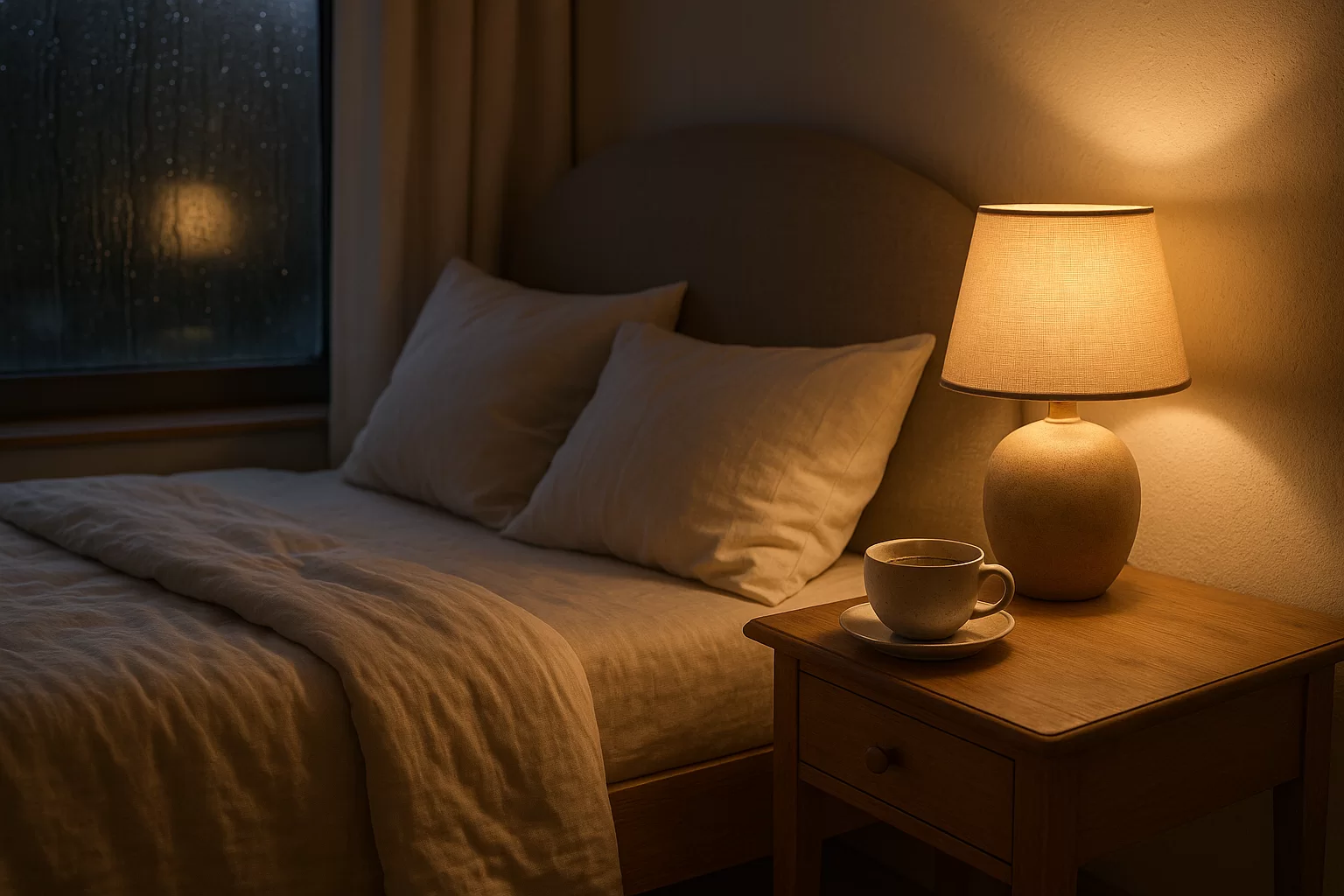
Evenings can feel crowded: messages to answer, meals to clean up, tomorrow to plan, and a mind that refuses to slow down on command. Rain sounds for relaxation give many people a simple bridge between daytime alertness and a calmer night rhythm.
This guide explains how to choose rain sounds, how to use them safely, and how to build a practical evening routine around them. It is not medical advice or a promise of sleep, but it can help you use ambient rain with more intention and fewer frustrating mistakes.
Quick Answer
Rain sounds can help evening calm when they are steady, gentle, and played at a low volume during a predictable wind-down routine. Choose a track without sudden thunder, loud ads, or dramatic musical changes, then listen for 20 to 45 minutes while you dim lights, reduce screens, stretch, journal, or read something light. The goal is not to force sleep or erase stress instantly. Instead, rain audio provides a familiar background that can mask household noise, reduce sensory contrast, and cue your body that the active part of the day is ending.
Relaxation Routine Builder
Choose your mood, time, listening style, and goal to create a simple wind-down direction.
Choose the options above, then build a recommendation you can use with the checklist, table, and sources in this guide.
In This Guide
Why Rain Sounds for Relaxation Work in the Evening
Rain is not magic, but it has qualities that can make relaxation easier. Gentle rainfall is usually broad, soft, and repetitive. That makes it useful for covering small interruptions such as traffic, distant conversations, hallway sounds, or appliances without demanding much attention.
Evening calm also depends on cues. When you pair the same rain texture with the same low-light routine, your brain may begin to associate that sound with slowing down. Trusted health resources on relaxation and stress emphasize regular calming practices; rain audio can be one approachable part of that pattern.
Noise masking
Rain fills the background with a steady layer of sound, making sudden household or street noises less noticeable. This can be especially helpful in apartments, shared homes, or neighborhoods where silence is rare.
Low mental effort
A simple rain loop gives attention somewhere neutral to rest. Unlike dialogue, lyrics, or news, it usually does not ask you to analyze, remember, or emotionally react.
Routine cue
Using the same sound at the same time can become a gentle signal. Over time, the cue may help you shift from productivity mode toward rest mode more smoothly.
Sensory softening
Rain pairs well with dim lighting, warm drinks, slow breathing, and light stretching. Together, these small cues create a softer evening environment without needing a complicated ritual.
Realistic expectation: rain sounds may make relaxation easier, but they do not treat anxiety, insomnia, pain, or chronic stress. If sleep problems are persistent, severe, or affecting daily life, consider speaking with a qualified health professional.
How to Choose the Right Rain Sound for Your Evening
The best rain track is the one your body does not keep checking. If you notice yourself waiting for the next thunderclap, judging the loop, or adjusting volume every few minutes, the sound is too engaging for relaxation. Aim for smooth, predictable, and boring in the best way.
Before you rely on a track for bedtime, test it earlier in the evening. Check whether it has ads, spoken intros, abrupt endings, or a short loop you can hear repeating. Also recheck app settings after updates, because autoplay, volume normalization, and sleep timers can change.
| Rain style | Best for | Watch for | Volume feel | Evening use |
|---|---|---|---|---|
| Soft window rain | Gentle wind-down | Thin loops | Very low | Reading |
| Steady roof rain | Noise masking | Harsh highs | Low | Apartment calm |
| Distant thunder | Cozy mood | Sudden booms | Low to medium | Early evening |
| Forest rain | Nature feel | Loud insects | Low | Stretching |
| Rain with music | Emotional reset | Melody focus | Very low | Journaling |
Rain Sound Evening Calm Planner
Use this quick tool before pressing play: choose one rain texture, set a timer, pick one quiet activity, and decide when the session ends. A clear plan prevents endless browsing and turns rain audio into a routine rather than another screen habit.
- Texture: window, roof, forest, or distant storm.
- Length: 20, 30, 45, or 60 minutes.
- Activity: light reading, stretching, journaling, or breathing.
- Stop point: lights out, book closed, or timer fade.
A Simple Evening Calm Routine With Rain Sounds
A good routine is short enough to repeat on a normal night. If it requires special candles, a perfect room, and an hour of free time, you may abandon it after two evenings. Start with a small sequence that works even when you are tired.
The routine below uses rain sounds for relaxation as the background, not the whole strategy. Pairing sound with light, movement, and screen boundaries gives your nervous system more consistent signals that the day is closing.
- Ten-minute reset: tidy one small area, prepare tomorrow’s essentials, and put your phone on charge away from the bed if possible.
- Set the sound: choose one tested rain track, lower the volume, and set a sleep timer or fade-out.
- Dim the room: use warmer light and reduce bright overhead lighting to make the environment feel less active.
- Do one calming activity: stretch your shoulders, write three lines in a notebook, or read a low-stakes book.
- Close the session: when the timer ends, avoid searching for a better track; let the routine be complete.
Example 30-minute version
Minutes 0 to 5: clear surfaces and start soft window rain. Minutes 5 to 15: stretch slowly. Minutes 15 to 25: write tomorrow’s top three tasks. Minutes 25 to 30: breathe quietly, lower lights, and let the timer fade.
Decision guidance: if you feel wired, choose plain rain without music. If you feel emotionally heavy, try rain with very soft ambient tones. If your room is noisy, roof rain may mask sound better than delicate drizzle.
Safe Listening and Realistic Expectations
Relaxation audio should never be loud. A useful rule is to keep rain sounds below conversation level and avoid sealing loud audio directly into your ears for long sessions. If you use earbuds, lower the volume further and give your ears breaks.
Safety also includes attention and environment. Do not use rain sounds in a way that prevents you from hearing alarms, children, caregiving needs, or important household signals. If you live with others, choose speaker placement and volume that respect their sleep too.
Mistake: chasing perfect sound
Endless searching can keep your brain active. Pick a good-enough track before bedtime and save experiments for earlier in the day, when comparison will not disrupt your wind-down.
Mistake: using sudden storms
Thunder can feel cozy to some listeners and startling to others. If you are sensitive to surprise sounds, choose steady rain without dramatic peaks or close lightning effects.
Mistake: playing too loud
Louder is not calmer. High volume can become stimulating, fatiguing, or unsafe over time. Lower the sound until it blends into the room instead of dominating it.
Mistake: expecting a cure
Rain audio can support a healthier routine, but it cannot solve every cause of restlessness. Stress, pain, caffeine, schedules, and medical issues may need separate attention.
Safe setup checklist
- Use a timer or fade-out instead of all-night autoplay when possible.
- Keep the device screen face down or out of reach.
- Check that alarms and important alerts are still audible.
- Turn off autoplay if the next track may be louder.
- Review volume after changing headphones, speakers, or apps.
When Rain Sounds Don’t Feel Relaxing
Not everyone finds rain soothing. For some people, it brings memories of storms, leaks, difficult travel, loneliness, or gloomy weather. Your reaction is valid. Relaxation tools should fit you, not force you into someone else’s idea of calm.
If rain audio is not helping, adjust one variable at a time. Change texture before changing your whole routine. Shorten the session before abandoning sound completely. If the sound repeatedly worsens distress, stop using it and choose a different calming cue.
- If it feels gloomy: try lighter drizzle with soft ambient music or switch to a warm crackling fire sound.
- If it feels distracting: choose a longer track with fewer details, no thunder, and no stereo movement.
- If it does not mask noise: use fuller roof rain or brown-noise-like rain at a safe low volume.
- If it keeps you awake: move the session earlier, use a timer, and end audio before lying down.
- If your partner dislikes it: try a small bedside speaker, lower volume, or alternate nights with silence.
- If ads interrupt: download an approved track, use an ad-free source, or test the platform before bedtime.
Current-check reminder: review your chosen app or platform every few weeks. A track may gain ads, a playlist may change order, or a device update may reset sleep timers and autoplay behavior.
Summary and Final Thoughts
Rain sounds for relaxation are most useful when they are simple, steady, and connected to a repeatable evening routine. Choose a texture that fades into the room, keep the volume gentle, and combine it with practical cues like dim lights, reduced screens, and a clear stop point.
The goal is better evening calm, not perfect sleep on command. If rain helps, let it be a quiet support. If it does not, adjust the sound or try another relaxation practice. Your best routine is the one you can repeat kindly and safely.
FAQ
Are rain sounds good for relaxation every night?
Rain sounds can be used nightly if they feel calming, stay at a safe low volume, and do not block important sounds. They are best treated as a supportive routine cue, not a requirement. If you become dependent or frustrated without them, practice some quiet nights too.
What volume should I use for rain sounds at bedtime?
Use the lowest volume that still softens the room. A practical test is whether you could hold a normal conversation over the audio without raising your voice. If using earbuds, go lower than you would with speakers and avoid loud all-night listening.
Is thunder relaxing or too stimulating?
Thunder depends on the listener. Distant, soft thunder can feel cozy, but sudden booms may increase alertness or startle you awake. If your goal is evening calm, test storm tracks earlier and choose plain rain if you are sensitive to surprise sounds.
Can rain sounds help with stress?
Rain sounds may help some people create a calmer setting and shift attention away from minor distractions. They do not remove the cause of stress or replace professional care. Pair them with realistic habits such as breathing, journaling, boundaries, and enough time to wind down.
Should rain sounds play all night?
Some people enjoy all-night sound, but a timer or fade-out is often a better first choice. It reduces unnecessary listening time, limits battery and device issues, and prevents unexpected autoplay. If all-night audio works for you, keep it low and review safety needs.
Sources and Further Reading
- Discover The Frozen Frontier: Calming Music For Relaxation
- Calm Rainy Night: Gentle Ambient Music And Rain Sounds For Peaceful Sleep
- How Can Meditation Sleeping Sounds Help You Sleep Better?
- Jedi Meditation: Deep Relaxation And Spiritual Connection
- National Center for Complementary and Integrative Health: Relaxation Techniques for Health
- American Psychological Association: Stress effects on the body
- NHS: Sleep and tiredness